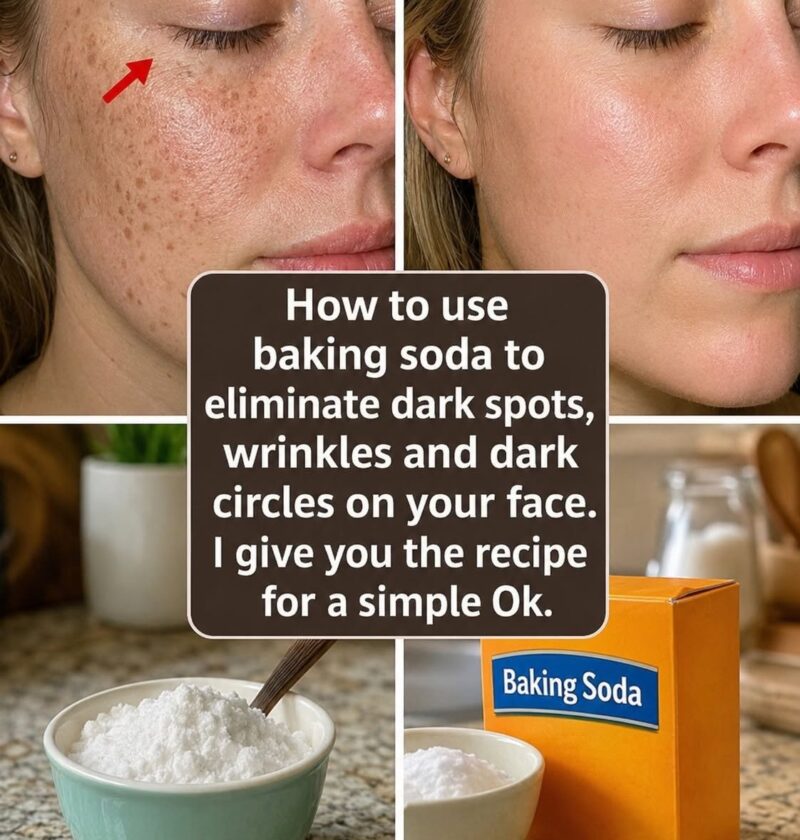
Using baking soda on the face is a popular internet “hack,” but it’s also one of the more risky ones. It can temporarily brighten skin, but it’s not a safe or effective treatment for dark spots, wrinkles, or dark circles—and dermatologists generally advise against regular use.
Baking soda (sodium bicarbonate) is very alkaline, while healthy skin is slightly acidic. This mismatch can damage the skin barrier.
Here’s what you should realistically know:
What baking soda actually does
- Acts as a mild abrasive exfoliant
- Can temporarily remove dead skin cells
- May make skin look smoother for a short time
But it does not:
- Remove dark spots (hyperpigmentation)
- Treat wrinkles
- Cure dark circles
- Improve collagen or skin structure
Risks of using it on your face
Frequent or direct use can cause:
- Skin irritation and redness
- Dryness and flaking
- Disruption of skin barrier
- Increased sensitivity to sun
- Worsening of pigmentation over time
This is especially important for conditions like Melasma or sensitive skin, where irritation can actually make dark spots worse.
Why dark circles and spots really happen
- Dark spots: sun exposure, hormones, acne marks
- Dark circles: genetics, thin skin, poor sleep, pigmentation
- Wrinkles: aging, sun damage, collagen loss
These have deeper causes that baking soda cannot fix.
What actually works better (safer options)
For dark spots
- Sunscreen daily (most important)
- Vitamin C serums
- Niacinamide
- Retinoids (gradual skin renewal)
For wrinkles
- Retinoids (retinol/retinoic acid)
- Moisturizers with hyaluronic acid
- Sun protection
For dark circles
- Sleep improvement
- Caffeine eye creams (temporary tightening)
- Treating allergies or rubbing habits
If people still insist on baking soda (not recommended)
If someone uses it anyway, dermatologists would say:
- Never use daily
- Avoid under-eye area completely
- Mix with water (never apply dry)
- Stop immediately if irritation appears