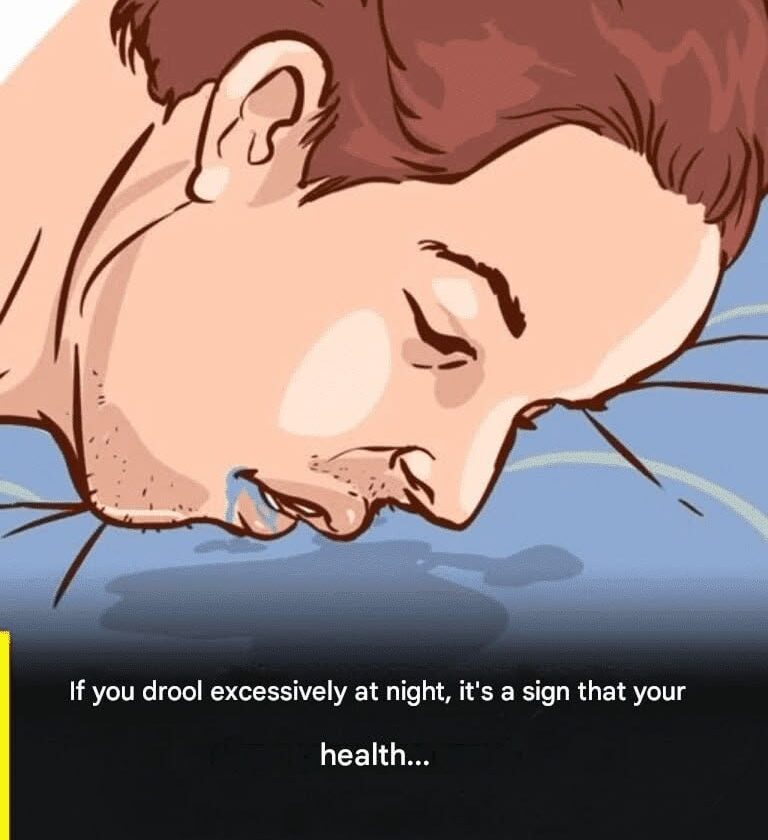
Excessive drooling (called sialorrhea) can be either harmless—or a clue that something else is going on. It really depends on the context, timing, and whether it’s new or long-standing.
😴 When it’s usually harmless
Drooling is often normal in situations like:
- Deep sleep (especially side or stomach sleeping)
- Nasal congestion (you breathe through your mouth)
- Relaxed jaw muscles during very deep rest
- Temporary fatigue or alcohol use
In these cases, it’s more about posture and breathing than a medical problem.
⚠️ When it can signal something underlying
1. Neurological conditions
Problems with muscle control or swallowing can increase drooling, such as:
- Parkinson’s disease
- Stroke
- Certain motor neuron disorders
This happens because swallowing frequency decreases, not because saliva increases.
2. Dental or oral issues
- Poor oral alignment
- Mouth infections
- Poor-fitting dentures (in adults)
3. Nasal or airway problems
If you can’t breathe through your nose, your mouth stays open:
- Allergies
- Sinus infections
- Enlarged tonsils
4. Gastroesophageal reflux
Acid reflux can trigger excess saliva production as a protective response.
5. Medications
Some drugs increase saliva or affect swallowing control, especially:
- Antipsychotics
- Certain antidepressants
- Some seizure medications
🚩 When to take it more seriously
Get checked if drooling is:
- New and persistent in adults
- Accompanied by difficulty swallowing or speaking
- Linked with weakness on one side of the body
- Occurring along with choking or coughing during meals
🧠 Bottom line
- Most drooling during sleep = normal and harmless
- Persistent daytime drooling = may signal breathing, dental, medication, or neurological issues
If you want, I can help you figure out the most likely cause based on when it happens (sleep, daytime, meals, etc.).