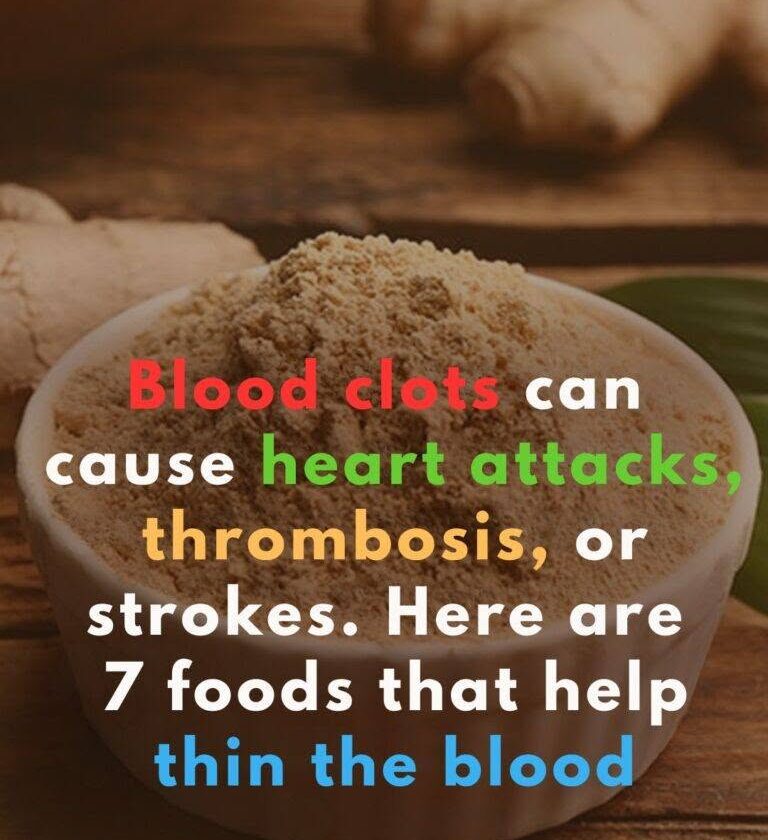
The idea of “blood-thinning foods” is often oversimplified online. No food truly acts like a prescription blood thinner, but some foods may have mild effects on blood clotting or circulation.
If you are already taking blood-thinning medication, don’t make major diet changes without medical advice.
Here are 7 foods often discussed in this context:
1. Garlic
Garlic
Contains sulfur compounds that may slightly reduce platelet aggregation (how blood cells stick together). Effects are mild.
2. Ginger
Ginger
May have anti-inflammatory and mild anti-clotting properties. Often used in teas and cooking.
3. Turmeric
Turmeric
Contains curcumin, which may influence inflammation and platelet activity, but effects from normal dietary amounts are small.
4. Fatty fish
Salmon
Omega-3 fatty acids may help reduce blood stickiness and support heart health.
5. Cinnamon
Cinnamon
Contains compounds that may mildly affect circulation and clotting in high amounts.
6. Pineapple
Pineapple
Bromelain is sometimes linked to reduced inflammation and clotting effects, though evidence in humans is limited.
7. Green tea
Green tea
Contains antioxidants (catechins) that may support blood vessel health.
Important safety note
These foods:
- Do NOT replace prescribed blood thinners like warfarin or aspirin
- Have mild and variable effects
- Can sometimes interact with medications if consumed in large amounts
When to be careful
Talk to a doctor if you:
- Are on anticoagulant medication
- Have a bleeding disorder
- Notice unusual bruising or bleeding
Bottom line
These foods can support overall heart and circulation health, but they are not strong or reliable blood thinners in a medical sense.
If you want, I can also list foods that increase clotting risk or explain how prescription blood thinners actually work.