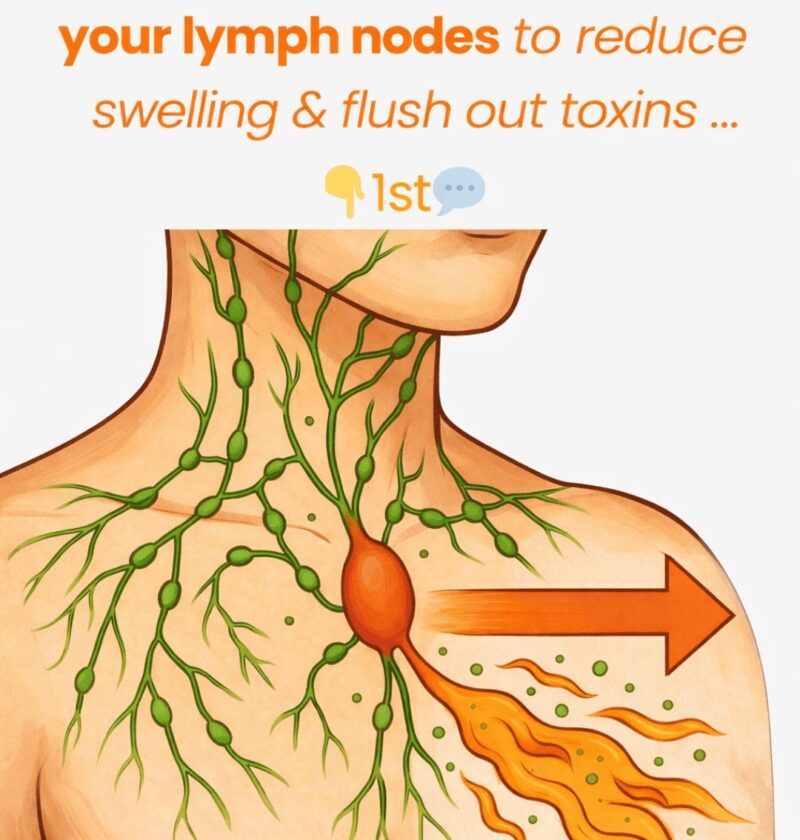
First, a quick reality check: lymph nodes don’t “clog” and you can’t “flush toxins” out of them with special tricks. Swollen lymph nodes are usually your immune system reacting to something like an infection (cold, flu, throat infection, dental issue), inflammation, or sometimes other medical conditions. In most cases, they improve once the underlying cause is treated.
That said, you can support your lymphatic system and reduce discomfort or swelling in safe, evidence-based ways:
7 safe ways to support lymph flow and reduce swelling
1. Keep gently moving your body
Walking, light stretching, or yoga helps lymph fluid circulate because it relies on muscle movement (not a pump like the heart). Even 20–30 minutes of easy movement helps.
2. Stay well hydrated
Water helps your body maintain normal fluid balance and supports immune function. Dehydration can make swelling feel worse and slow recovery.
3. Warm compress for comfort
If a lymph node is tender or swollen, a warm (not hot) compress can:
- Improve local blood flow
- Reduce discomfort
- Help the area feel less tight
4. Gentle lymphatic massage (very light pressure)
Light skin-level massage near (not directly hard-pressing) swollen areas can encourage lymph movement. It should feel soft and relaxing—not deep tissue pressure.
Avoid this if the area is very painful, red, or infected.
5. Get enough rest
Your lymphatic system works harder during illness. Sleep helps immune cells function properly and reduces inflammation.
6. Manage the underlying cause
Swollen lymph nodes are a symptom, not the problem itself. Common causes include:
- Throat or sinus infections
- Dental infections
- Skin infections
Treating the cause is what actually reduces swelling.
7. Reduce irritation triggers
Avoid:
- Smoking
- Excess alcohol
- Overexertion when sick
These can increase inflammation and slow recovery.
When to see a doctor
Get checked if you notice:
- Swelling lasting more than 2–3 weeks
- Very hard or fixed lumps
- Rapid growth
- High fever or night sweats
- Unexplained weight loss
- Severe pain or redness
If you want, tell me where the swelling is (neck, armpit, groin, etc.) and I can explain the most likely causes for that specific area.