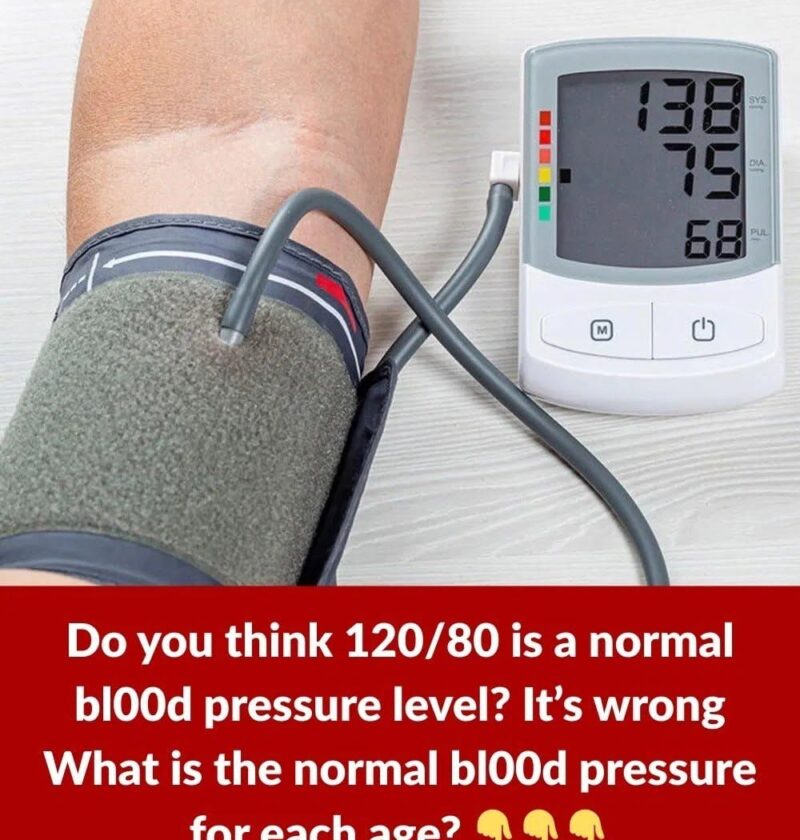
The idea that there is a completely different “normal blood pressure for each age” is common online—but it’s not exactly how doctors define it.
Today, clinicians mostly use one standard target range for adults, with only slight adjustments for children and special medical conditions.
Let’s break it down clearly.
🫀 What is “normal” blood pressure?
Blood pressure is written as:
- Systolic (top number)
- Diastolic (bottom number)
For most adults, the reference is:
✔️ Normal blood pressure
- Around 120/80 mmHg
⚠️ Elevated
- 120–129 / less than 80
🚨 High blood pressure (hypertension)
- ≥130 / ≥80 mmHg
This is linked to risk of heart disease and Ischemic Stroke.
👶 Blood pressure by age (general trends)
🧒 Children
Blood pressure varies by height, age, and sex.
- Rough range: 90/60 to 110/70 mmHg
- Doctors use percentile charts, not fixed numbers
🧑 Teens
- Often close to adult levels
- ~110/70 to 120/80 mmHg
👩 Adults (18–59)
- Ideal: around 120/80 mmHg
- 130/80+ is considered high
👴 Older adults (60+)
- Slightly higher readings are common
- But targets are still often:
- <130–140 systolic
- diastolic usually <80–90 depending on health
Doctors may individualize targets for frailty or other conditions.
⚠️ Important misconceptions
- “Higher blood pressure is normal with age” → partly true but not ideal
- “No need to treat older adults’ high BP” → false
- “Low BP is always good” → false (too low can cause dizziness/fainting)
🧠 Key takeaway
There isn’t a separate “perfect number” for every age group in adults. Instead, doctors aim for:
Stable blood pressure close to 120/80 mmHg whenever safely possible
🚨 Why it matters
Uncontrolled high blood pressure is the #1 risk factor for:
- heart disease
- kidney damage
- Ischemic Stroke
If you want, I can also give you:
- a simple chart of BP categories you can screenshot
- or tips to naturally lower blood pressure in 2–4 weeks