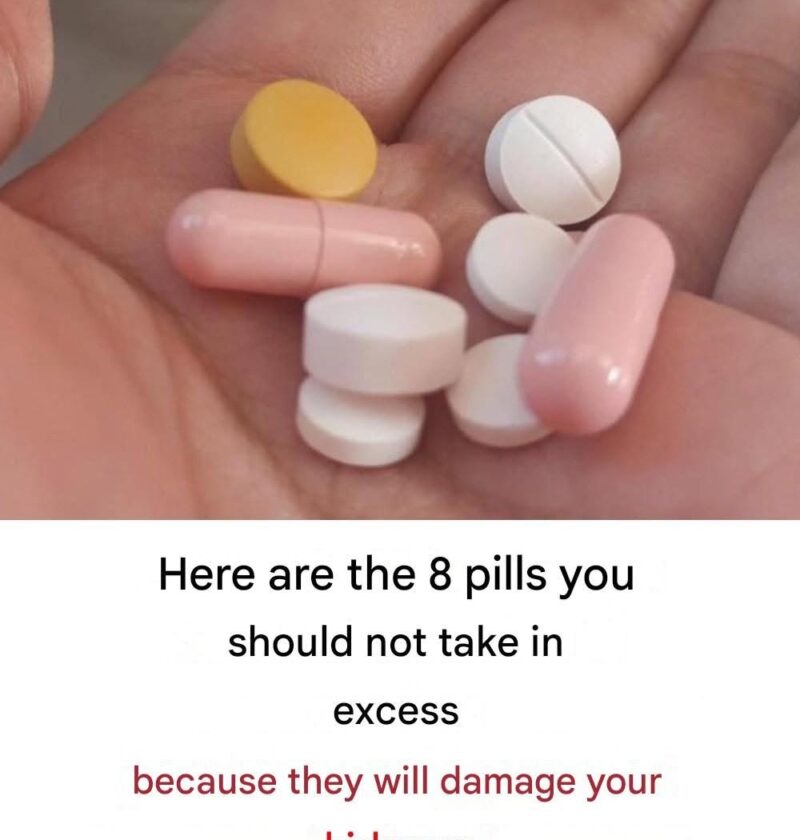
The idea that “8 pills should never be taken because they damage your kidneys” is usually a simplified viral list. In reality, many medicines are safe when used correctly, but some can harm the kidneys if misused, overused, or taken in high-risk people (dehydration, older age, kidney disease, etc.).
Here are common types of medications that can affect kidney health if not used properly:
1. NSAID painkillers (very common risk)
Examples: ibuprofen, diclofenac, naproxen
These are widely used for pain and fever.
Why they can be risky:
- Reduce blood flow to the kidneys
- Risk increases with dehydration or long-term use
2. Certain antibiotics (aminoglycosides)
Examples: gentamicin, amikacin
Why risky:
- Can directly damage kidney filtering cells if not carefully monitored
3. Proton Pump Inhibitors (acid reflux medicines)
Examples: omeprazole, esomeprazole, pantoprazole
Risk:
- Long-term use has been linked to chronic kidney inflammation in some studies
4. Lithium (for bipolar disorder)
A well-known mood stabilizer
Risk:
- Can build up in the body and affect kidney function over time
- Requires regular blood monitoring
5. Certain antiviral drugs
Examples: tenofovir (used in HIV/hepatitis treatment)
Risk:
- Can stress kidney tubules in some patients
6. Contrast dyes (used in CT scans)
Not a pill, but often included in these lists
Risk:
- Can temporarily reduce kidney function, especially in high-risk patients
7. Some herbal and “natural” supplements
Examples: aristolochic acid–containing herbs, unregulated kidney “cleanses”
Risk:
- Some are directly toxic to kidney tissue
- Supplements are not always tested for safety
8. Diuretics (water pills)
Examples: furosemide, hydrochlorothiazide
Risk:
- Usually safe when prescribed, but misuse can cause dehydration and kidney stress
Important reality check
- These are not “forbidden pills”
- Millions of people take them safely every day
- Kidney damage usually happens due to:
- High doses
- Long-term unsupervised use
- Dehydration
- Existing kidney disease
Simple safety rules
- Don’t overuse painkillers (especially NSAIDs)
- Drink enough water unless medically restricted
- Avoid mixing multiple painkillers without advice
- Get kidney function checked if on long-term medication
If you want, I can also tell you early warning signs of kidney damage from medicines or which painkillers are considered safest for everyday use.