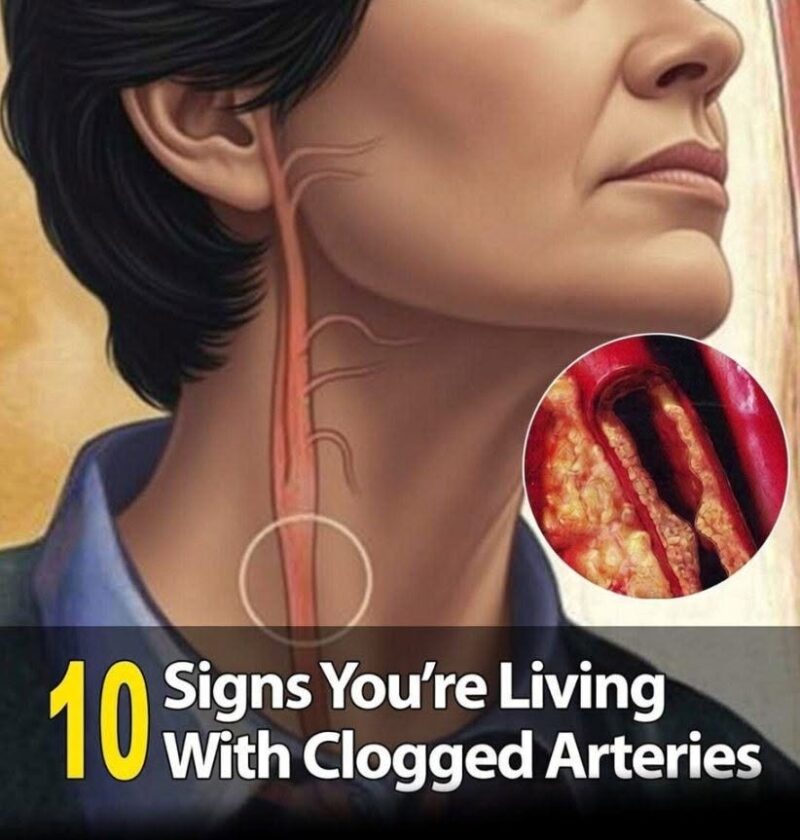
“Blocked arteries” usually refers to Atherosclerosis, a condition where fatty deposits (plaques) narrow blood vessels and reduce blood flow—especially to the heart and brain. When it affects the heart, it can lead to Coronary artery disease.
The symptoms are often subtle and develop over time. Here are 10 possible warning signs people are commonly advised not to ignore:
⚠️ 10 possible indicators of blocked arteries
1. Chest pain or pressure (angina)
- Tightness, heaviness, or squeezing in the chest, especially during activity
2. Shortness of breath
- Feeling winded during light activity or even at rest in advanced cases
3. Fatigue
- Unusual tiredness, especially with exertion, due to reduced oxygen flow
4. Pain in arms, neck, jaw, or back
- Discomfort may spread beyond the chest (often in the left side)
5. Dizziness or lightheadedness
- Reduced blood flow to the brain
6. Cold or numb extremities
- Poor circulation in hands or feet
7. Slow-healing wounds
- Especially in legs or feet (more common in peripheral artery disease)
8. Leg pain when walking (claudication)
- Cramping that improves with rest
9. Irregular heartbeat or palpitations
- Heart working harder due to restricted blood flow
10. Nausea or sweating (especially in heart-related cases)
- Sometimes occurs with chest discomfort during a cardiac event
Important context
- These symptoms are not specific to blocked arteries—they can also come from anxiety, lung disease, anemia, acid reflux, or other conditions.
- Some people have no symptoms until a serious event like a heart attack.
🚨 When to seek urgent help
Get emergency care if you have:
- Severe chest pain or pressure lasting more than a few minutes
- Chest pain with sweating, nausea, or shortness of breath
- Pain spreading to arm, jaw, or back
If you want, I can also explain:
- how doctors test for blocked arteries (ECG, angiography, stress tests)
- or lifestyle changes that actually help prevent them (based on real clinical evidence, not internet myths)