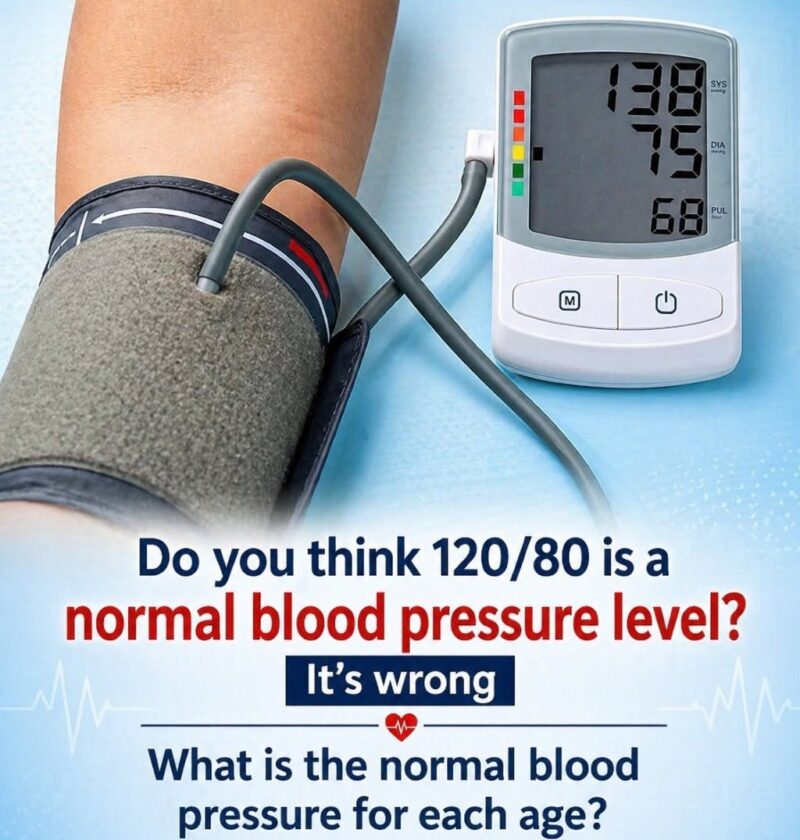
Blood pressure doesn’t have a separate “normal range for every single age,” but it does change slightly across life. Modern medical guidelines mostly use one standard adult target, while children use age-based percentiles.
Below is a clear, practical breakdown.
🩺 Normal blood pressure (adults)
For most adults, the standard “normal” is:
- Normal: below 120/80 mmHg
- Elevated: 120–129 / below 80
- High blood pressure (Hypertension Stage 1): 130–139 / 80–89
- Hypertension Stage 2: ≥140 / ≥90
This applies broadly to adults of all ages (18+), including older adults.
👶 Children & teens (approximate normal ranges)
For children, “normal” depends on age, height, and sex, but general averages are:
- Newborn (0–1 month): ~60–90 / 20–60
- Infant (1–12 months): ~80–100 / 50–65
- Toddler (1–3 years): ~90–105 / 55–70
- Child (4–12 years): ~95–110 / 60–75
- Teen (13–17 years): ~105–120 / 65–80
Teens gradually approach adult levels.
👴 Older adults
- Healthy older adults are still generally considered normal at <120/80
- Doctors may sometimes tolerate slightly higher readings in very elderly or frail patients, but this depends on individual health conditions
⚠️ Key points to understand
- There is no “one perfect number” for every age
- A reading must be interpreted with:
- symptoms
- medical history
- risk factors (diabetes, kidney disease, heart disease)
🚨 When to worry
Seek medical attention if:
- BP is consistently ≥140/90
- BP is ≥180/120 (emergency range)
- You have symptoms like chest pain, headache, dizziness, or shortness of breath
If you want, I can also give you:
- a blood pressure chart you can save
- or explain how to measure BP correctly at home (most people do it wrong)