Sleeping on your right side is generally safe for most people, and there’s no strong evidence that it causes serious harm by itself. But compared with left-side sleeping, it can matter in a few specific situations.
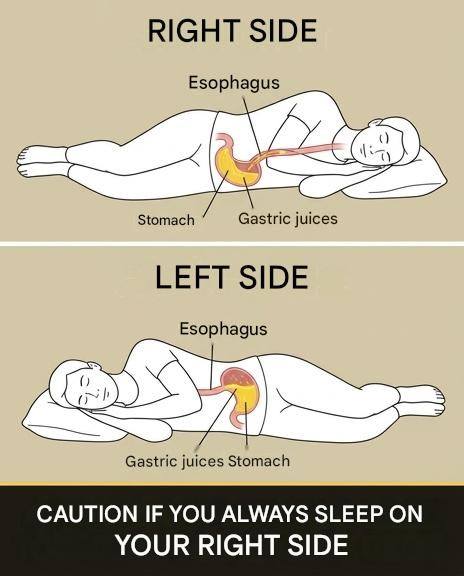
One of the most discussed issues is acid reflux. When you lie on your right side, the stomach sits in a way that can make it easier for stomach acid to flow back into the esophagus. That can worsen symptoms of Gastroesophageal Reflux Disease (GERD) or simple heartburn. For many people with reflux, left-side sleeping tends to reduce symptoms.
Another situation is during pregnancy. Lying on the right side (or on the back) can, in later pregnancy, slightly increase pressure on large blood vessels because of the position of the uterus. That’s why doctors often recommend left-side sleeping as more optimal for blood flow—but right-side sleeping is still usually acceptable in early pregnancy or when changing positions during the night.
For people with breathing issues such as Obstructive Sleep Apnea, side sleeping in general (left or right) is often better than sleeping on the back, because it can reduce airway collapse. The “risk” isn’t really right-side specific here—what matters more is avoiding the back position.
As for heart health, there’s a common myth that right-side sleeping “harms the heart.” In reality, there’s no solid clinical evidence that it damages heart function in healthy individuals. Some people with heart failure or discomfort may prefer the left side or a more elevated position, but this is individualized rather than a universal rule.
Bottom line:
Right-side sleeping is not dangerous for most people. The main possible downside is that it may worsen acid reflux symptoms in people who already have GERD. Otherwise, it’s mostly a matter of comfort and personal health conditions rather than risk.