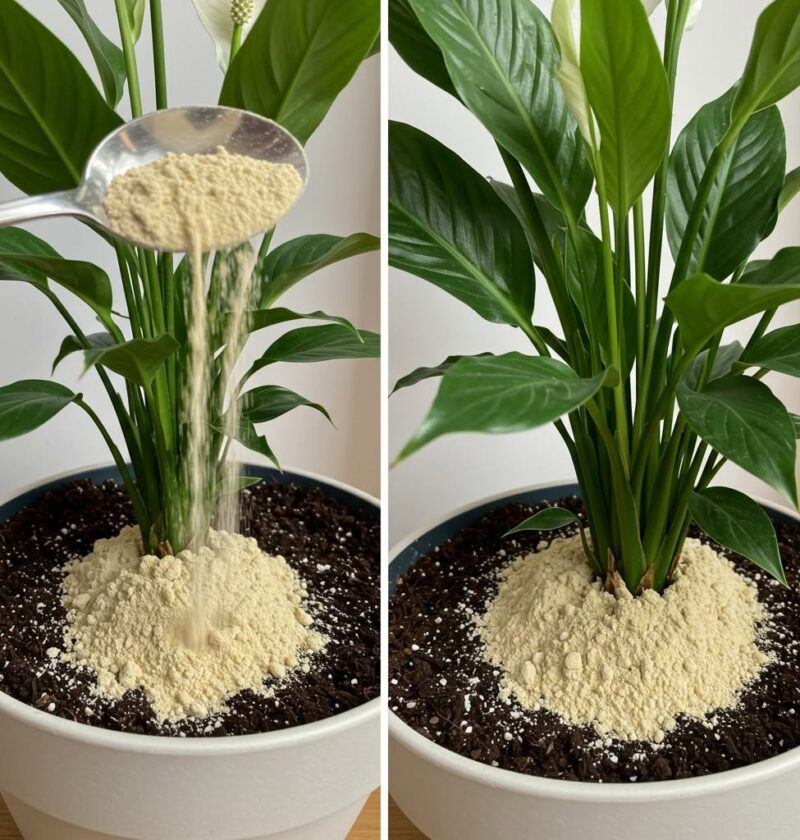
A Peace Lily is a popular indoor houseplant known for its glossy green leaves and elegant white flowers (which are actually specialized leaf structures called spathes).
Basic Care
🌿 Light
- Prefers bright, indirect light.
- Can tolerate low light, but flowering may be reduced.
- Avoid direct sunlight, which can scorch the leaves.
💧 Water
- Keep the soil lightly moist but not waterlogged.
- Water when the top inch (2–3 cm) of soil feels dry.
- Peace lilies often droop when thirsty and usually recover quickly after watering.
🌡️ Temperature
- Thrives between 18–27°C (65–80°F).
- Protect from cold drafts and temperatures below 10°C (50°F).
💨 Humidity
- Enjoys moderate to high humidity.
- Occasional misting can help in dry indoor environments.
🪴 Soil
- Use a well-draining potting mix.
- Ensure the pot has drainage holes.
Benefits
- Attractive foliage and blooms.
- Relatively easy to care for.
- Helps improve indoor air quality, although the effect in typical homes is modest.
Common Problems
- Yellow leaves: Often caused by overwatering.
- Brown leaf tips: Can result from low humidity, fluoride in tap water, or inconsistent watering.
- No flowers: Usually due to insufficient light.
Safety Warning
⚠️ Peace lilies contain calcium oxalate crystals and are toxic to cats, dogs, and people if chewed or ingested. They can cause mouth irritation, drooling, and difficulty swallowing.
If you’d like, I can also explain how to make a peace lily bloom more often or how to revive a drooping peace lily.