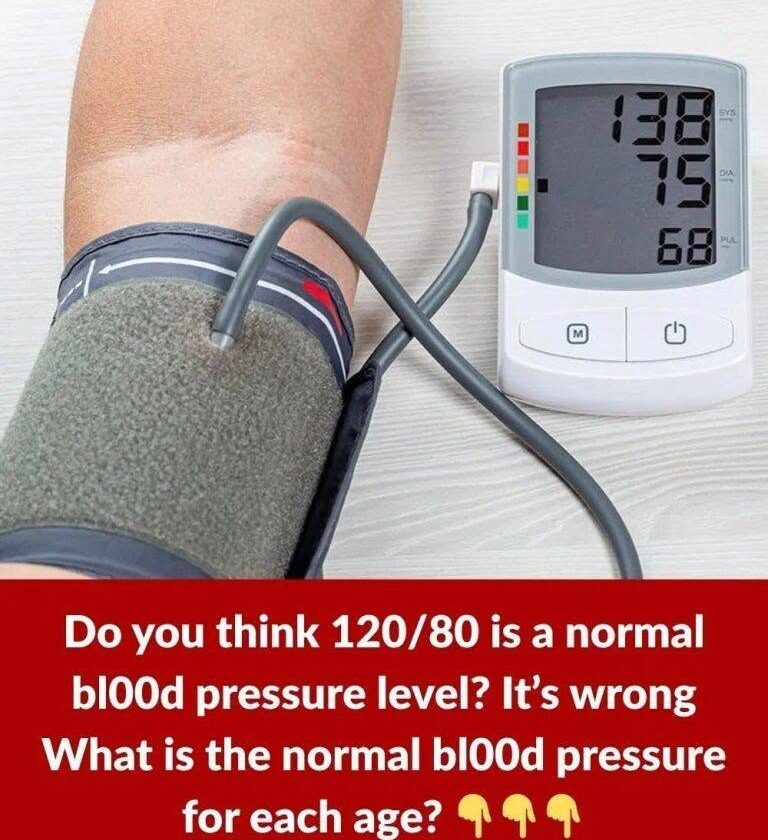
There isn’t a separate “perfect blood pressure for every age” anymore in modern medicine. Most guidelines use one healthy adult target, but blood pressure does tend to rise slightly with age.
First, the universal reference (adults)
For most adults:
- Normal: around below 120/80 mmHg
- Elevated: 120–129 / <80
- High blood pressure (Hypertension): 130/80 or higher (depending on guideline)
Typical blood pressure ranges by age (general averages)
These are approximate normal ranges seen in healthy people, not strict targets:
Children
- Newborns: ~60–90 / 20–60
- Infants (1–12 months): ~80–100 / 50–65
- Toddlers (1–5 years): ~90–105 / 55–70
- School age (6–12 years): ~95–110 / 60–75
👉 In children, “normal” depends heavily on height, age, and sex.
Teenagers (13–18 years)
- ~105–120 / 65–80
👉 By late teens, values start approaching adult ranges.
Adults (18–59 years)
- Ideal: ~110–120 / 70–80
- Acceptable: up to 120–129 / <80
- Consistently 130/80+ is considered high
Older adults (60+ years)
- Often slightly higher due to stiffer arteries:
- ~120–140 / 70–85 may be common
- However:
- Many doctors still aim for below 130/80 if tolerated
Important points people often miss
- A “normal range” is not a guarantee of health—trend matters more than a single reading.
- Blood pressure changes throughout the day.
- Stress, caffeine, pain, and exercise can temporarily raise it.
When to worry
- Repeated 140/90 or higher: possible hypertension
- 180/120 or higher: medical emergency if symptoms occur
- Very low (below ~90/60 with dizziness/fainting): may be too low for some people
If you want, tell me your age and recent readings, and I can interpret whether they’re actually normal for your situation.