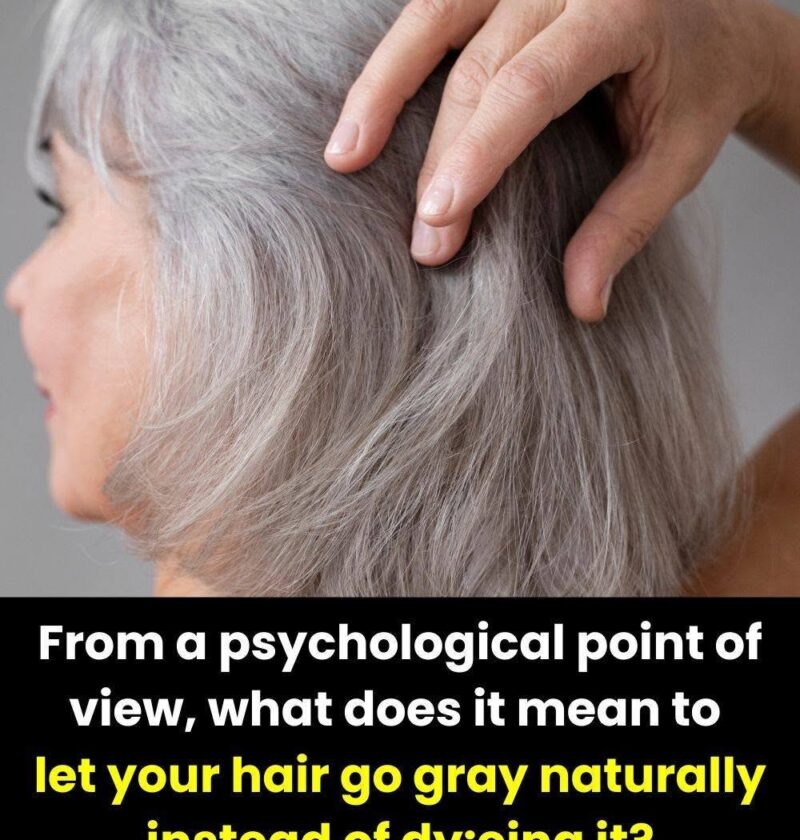
People who go gray can sometimes make others uncomfortable for a few psychological and cultural reasons:
🧠 1. It challenges age expectations
Gray hair is strongly associated with aging in many cultures. When someone embraces it, it can:
- make others more aware of aging (their own or society’s)
- disrupt the expectation that people should “look young”
This discomfort is usually about aging anxiety, not the hair itself.
🎭 2. It breaks grooming norms
In many workplaces and social environments, there’s an unspoken rule that people should:
- cover gray hair
- maintain a “youthful” appearance
Choosing not to dye hair can be seen (unfairly) as going against that norm.
💼 3. Professional bias still exists
Even though attitudes are changing, some industries still associate:
- darker/colored hair → “energetic” or “modern”
- gray hair → “older” or “less competitive”
This is a bias, not a reality about capability.
👁️ 4. It draws attention because it’s uncommon in some groups
If most people dye their hair, someone with natural gray stands out. Humans are naturally drawn to:
- differences in appearance
- anything that signals “change” or “status shift”
🧍♂️ 5. It can challenge personal insecurities in others
Seeing someone confidently age naturally can unconsciously trigger:
- fear of aging
- pressure about appearance
- comparison thoughts
Again, this reflects the observer more than the person with gray hair.
🌿 Important reality check
There is nothing inherently “uncomfortable” about gray hair. In fact:
- it’s natural
- it’s common with age
- it’s increasingly seen as stylish and confident
🧠 Bottom line
Any discomfort people feel about gray hair usually comes from cultural conditioning and attitudes toward aging, not the hair itself.
If you want, I can also explain why gray hair is becoming more accepted and even fashionable in modern culture.