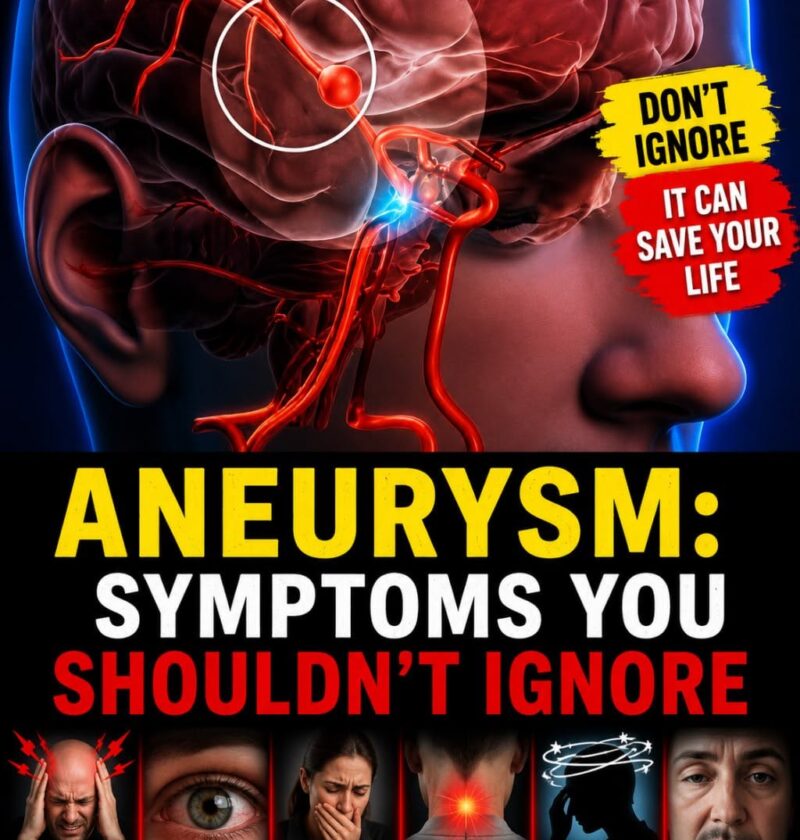
An aneurysm is an abnormal bulging or weakening in a blood vessel wall. Many aneurysms cause no symptoms until they become large or rupture, which is why warning signs matter.
Aneurysm can occur in different parts of the body, most importantly the brain and aorta.
🚨 Signs you should NOT ignore
🧠 Possible brain aneurysm / rupture
Intracranial aneurysm
Seek emergency help if you notice:
- Sudden “worst headache of your life”
- Headache that comes on instantly and intensely
- Loss of consciousness or fainting
- Blurred or double vision
- Stiff neck
- Seizures
- Sudden weakness or numbness (face, arm, or leg)
- Difficulty speaking
👉 A ruptured brain aneurysm can cause a life-threatening brain bleed (stroke-like emergency).
❤️ Possible aortic aneurysm (chest or abdomen)
Abdominal aortic aneurysm
Thoracic aortic aneurysm
Watch for:
- Deep, persistent chest or back pain
- Sudden tearing or ripping sensation in chest/back
- Pulsating feeling in the abdomen
- Shortness of breath
- Hoarse voice or difficulty swallowing (in chest aneurysms)
👉 Rupture here can cause sudden internal bleeding and collapse.
⚠️ Often silent (early stage)
Many aneurysms grow quietly. Some people only discover them during scans for other reasons.
Possible mild warning signs (if they occur):
- Mild, persistent pain near the affected area
- Pressure sensation in chest, abdomen, or behind the eyes
- Neurological symptoms if pressing on nearby nerves
🧠 Who is at higher risk?
- High blood pressure
- Smoking
- High cholesterol
- Family history of aneurysm
- Age over 50
- Certain genetic conditions
🚑 When to seek emergency help
Call emergency services immediately if you experience:
- Sudden severe headache
- Sudden collapse or fainting
- Severe chest/back/abdominal pain
- Sudden neurological changes
Bottom line
An aneurysm is often silent—but when it shows symptoms, especially sudden severe pain or neurological changes, it can be a medical emergency and should never be ignored.
If you want, I can also explain:
- How aneurysms are detected before rupture
- Differences between aneurysm vs stroke symptoms
- Or whether small aneurysms always need surgery