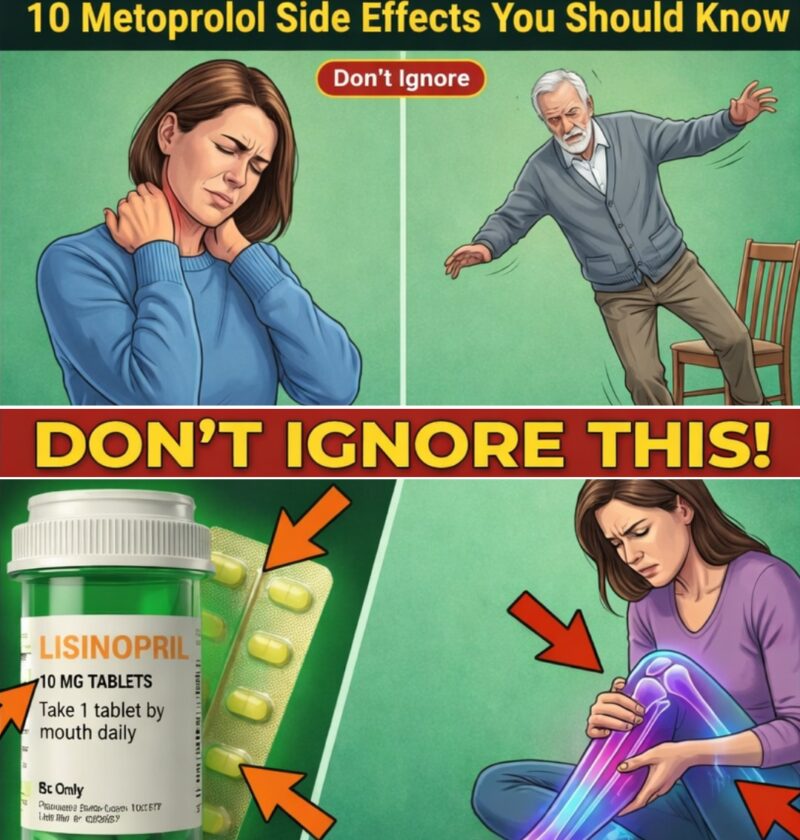
That headline is classic fear-based clickbait. Metoprolol is a widely used beta-blocker (for blood pressure, heart rhythm issues, angina), and while it can have side effects, most are well-known and monitored by doctors—not hidden or “prayed you don’t discover.”
Here are the real, medically recognized side effects of Metoprolol:
Common side effects
- Fatigue or low energy
- Dizziness (especially when standing up quickly)
- Slow heart rate
- Cold hands and feet
- Mild nausea
Less common but important
- Sleep disturbances or vivid dreams
- Shortness of breath (in people with asthma/COPD sensitivity)
- Depression or low mood in some users
- Reduced exercise tolerance
Rare but serious (need medical attention)
- Very slow heart rate (bradycardia) causing fainting
- Worsening heart failure symptoms (swelling, breathlessness)
- Severe low blood pressure
- Allergic reactions (rash, swelling, breathing difficulty)
Important context doctors do emphasize
- Metoprolol is often life-protecting, not just symptom control
- Side effects are usually dose-related and manageable
- Stopping it suddenly can be dangerous (can trigger chest pain or heart rhythm issues)
Bottom line
It’s not a hidden-danger drug—it’s a well-studied, standard heart medication. The real issue is balance: benefits vs manageable side effects, which your doctor already considers when prescribing it.
If you want, I can break down who should avoid metoprolol or how to tell whether a symptom is normal adjustment vs something to report.