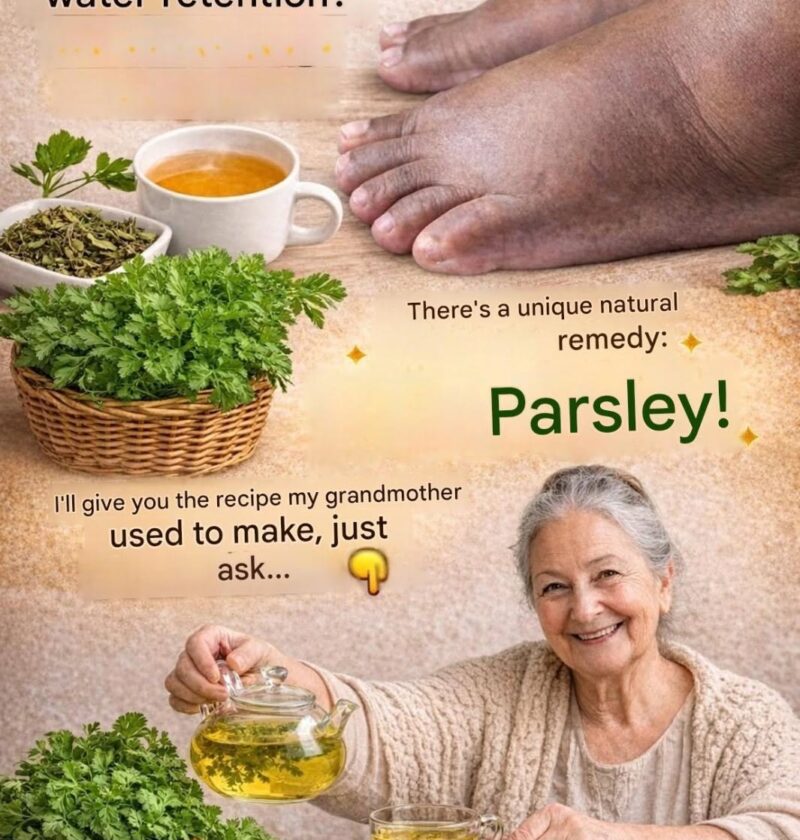
That type of post is usually based on a mix of truth and exaggeration.
Parsley (Parsley) has a long history of use in traditional medicine and does contain nutrients and plant compounds that may have health benefits. However, many viral claims overstate what it can do.
What parsley does contain
- Vitamin K (important for blood clotting and bone health)
- Vitamin C
- Vitamin A precursors (carotenoids)
- Antioxidants such as flavonoids
Traditional uses
Historically, parsley was used as:
- A mild diuretic (“water pill”) to increase urine output
- A digestive aid
- A breath freshener
- A source of vitamins before modern supplements were available
What the evidence says
Some laboratory and animal studies suggest parsley may have antioxidant and anti-inflammatory properties, but there is limited high-quality evidence in humans showing that parsley can treat diseases.
Important cautions
- Large amounts of parsley are not necessarily better.
- People taking blood thinners such as Warfarin should keep their vitamin K intake consistent and discuss major dietary changes with their healthcare provider.
- Parsley should not be relied upon as a treatment for serious medical conditions.
So the claim that “our grandmothers used it medicinally” is broadly true, but the implication that parsley is a forgotten cure for major diseases is not supported by modern medical evidence. It’s a nutritious herb and a healthy addition to meals, but it’s not a miracle remedy.