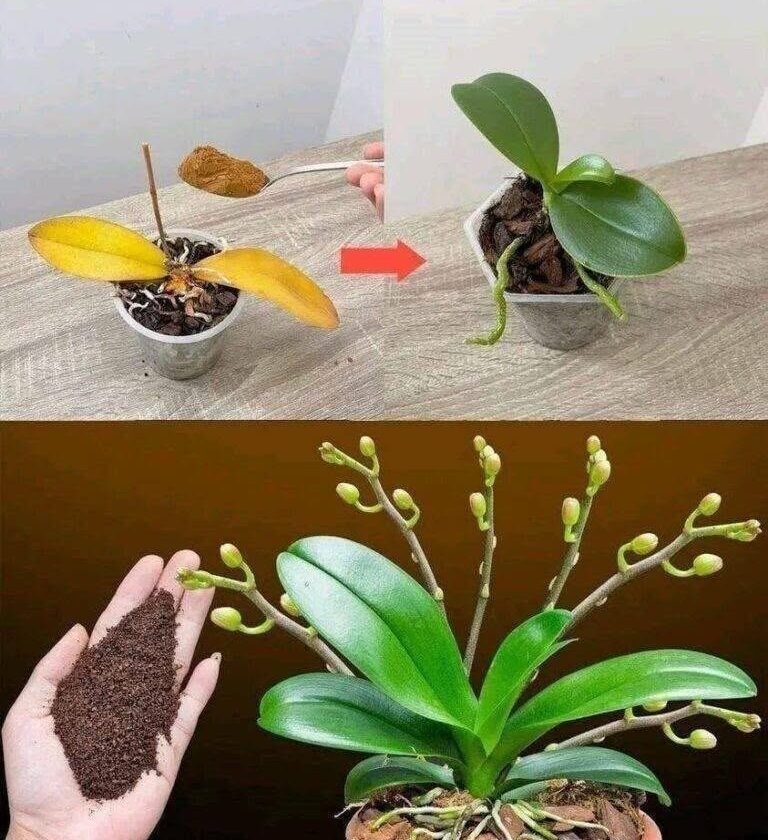
That line is viral clickbait, not real gardening science. There is no single “teaspoon trick” that makes an orchid suddenly produce lots of flowers.
The plant most often shown in these posts is the Phalaenopsis orchid.
🌸 What actually determines orchid blooming
Orchids bloom based on environment + plant health, not a magical ingredient. Key factors:
1. Light (most important)
- Bright, indirect light
- Too little light = no flowers
- Too much direct sun = leaf burn
2. Temperature trigger
- Slight drop in night temperature (about 16–18°C)
- This often triggers flower spike formation
3. Proper watering
- Water when roots turn silvery
- Overwatering is the #1 reason orchids stop blooming
4. Healthy roots
- Rotten roots = no flowers
- Healthy green/silver roots = active growth
5. Right fertilizer (not a “teaspoon hack”)
- Weak, diluted orchid fertilizer during growth phase only
- Over-fertilizing can actually reduce blooming
🧪 What “teaspoon tricks” usually are
These viral posts often suggest:
- Banana water
- Rice water
- Sugar water
- Milk or coffee
Reality:
- No strong scientific evidence supports these for blooming
- They can:
- Attract fungus or bacteria
- Damage roots
- Cause mold in potting media
🌿 What does reliably help orchids bloom
For Phalaenopsis orchid:
✔ Stable indirect light
✔ Slight nighttime cooling
✔ Proper watering cycle
✔ Orchid-specific fertilizer (very diluted)
✔ Repotting every 1–2 years
🚫 Bottom line
There is no teaspoon shortcut for instant blooming. Orchids don’t respond to hacks—they respond to consistent care over weeks and months.
If you want, I can show you a simple step-by-step method to force a healthy orchid to rebloom within 2–3 months naturally (no gimmicks).