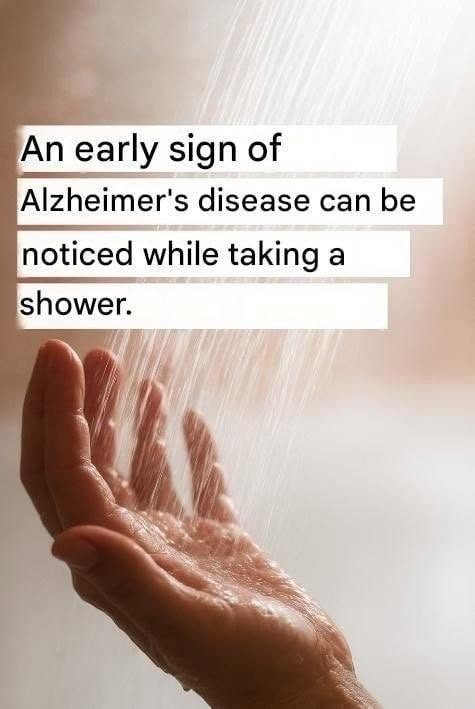
That line is another attention-grabbing simplification, but it’s based on a real concept.
In some people, early Alzheimer’s disease or other forms of dementia can show up in everyday tasks like showering—not because the shower itself is special, but because it requires multi-step planning and sequencing.
What people sometimes notice early on:
- Forgetting the order of steps (soap, rinse, shampoo, repeat confusion)
- Getting confused about why they entered the bathroom
- Difficulty handling temperature or water controls
- Skipping parts of hygiene without realizing it
- Needing more reminders or supervision for routine self-care
These issues fall under something called functional decline in activities of daily living (ADLs). Showers just happen to expose it because they require coordination, memory, and safety awareness all at once.
But here’s the important correction:
Having a bad shower experience, feeling dizzy, or occasionally forgetting a step is not a sign of Alzheimer’s on its own. That would be normal for many reasons—stress, fatigue, medication effects, depression, or just distraction.
Clinically, concern rises when these problems are consistent, progressive, and affecting multiple daily tasks, not just isolated moments.
So the claim is half-truth wrapped in clickbait: the shower isn’t an “Alzheimer detector,” but breakdowns in routine self-care can be one of many early warning patterns in cognitive decline.