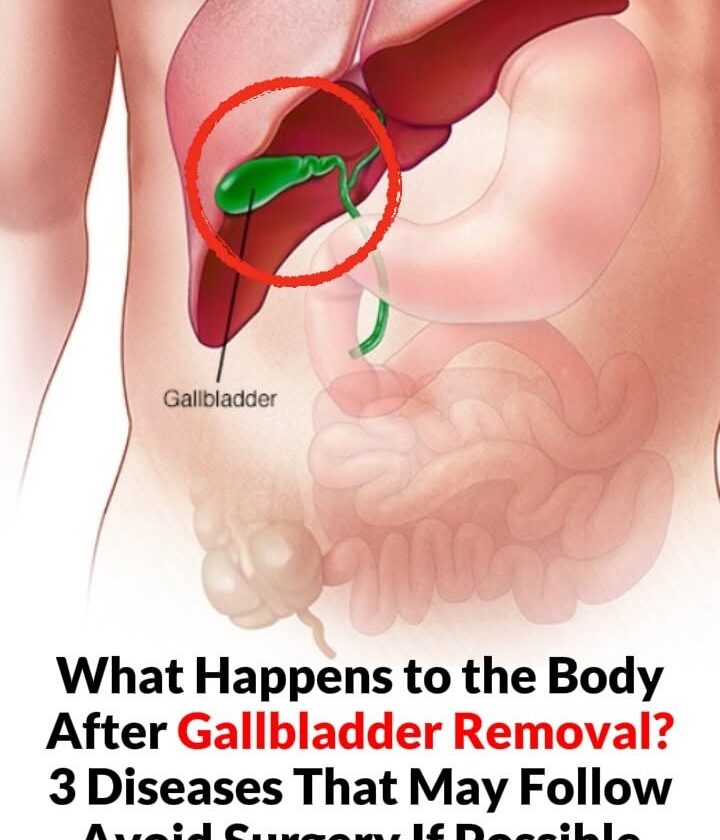
The title “What Happens to the Body After Gallbladder Removal? 3 Diseases That May Follow – Avoid Surgery If Possible” is somewhat misleading.
What the gallbladder does
The gallbladder stores and concentrates bile produced by the liver. After gallbladder removal (cholecystectomy), bile flows directly from the liver into the intestine instead of being stored.
What usually happens after surgery?
Most people live normal, healthy lives without a gallbladder. However, some experience:
- Diarrhea or loose stools
- Bloating or indigestion
- Difficulty tolerating very fatty meals
- Abdominal discomfort (often temporary)
These symptoms often improve over weeks to months.
Are there diseases that may occur afterward?
Research has found associations between gallbladder removal and a slightly increased risk of certain conditions, but this does not mean the surgery directly causes them in most people.
Examples sometimes discussed include:
- Bile Acid Diarrhea
- Nonalcoholic Fatty Liver Disease (association seen in some studies)
- Postcholecystectomy Syndrome
The absolute risk for most individuals remains relatively low, and many people never develop these problems.
Should surgery be avoided if possible?
Not necessarily.
Gallbladder surgery is often recommended when someone has:
- Recurrent painful gallstones
- Gallbladder inflammation
- Gallstone pancreatitis
- Bile duct obstruction
- Other complications
In these situations, avoiding surgery can sometimes be riskier than having it.
When might surgery not be needed?
If gallstones are present but causing no symptoms, many people do not require immediate surgery. Treatment decisions depend on:
- Symptoms
- Stone size and location
- Complications
- Overall health
Bottom line
Gallbladder removal can lead to digestive changes and may be associated with certain health conditions, but the claim that everyone should “avoid surgery if possible” is too broad. For people with serious gallbladder disease, cholecystectomy is often a safe, effective treatment that prevents dangerous complications.
If you have a specific article or video making these claims, I can analyze its evidence point by point.