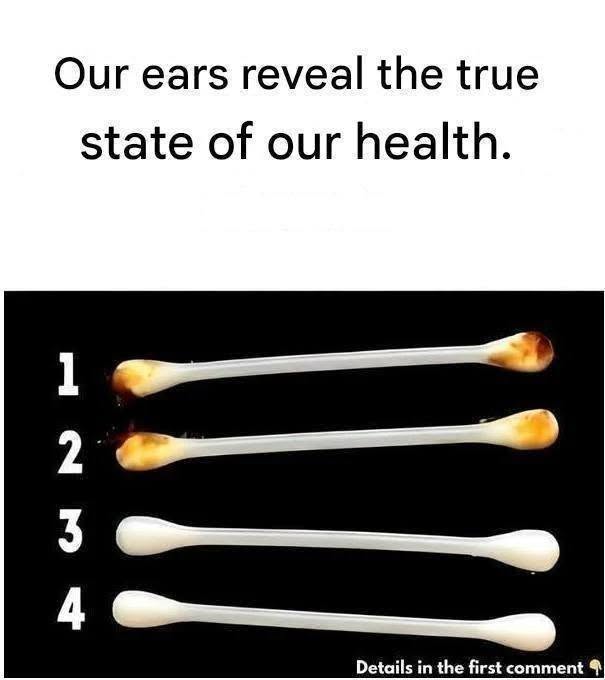
Yes—there’s a bit of truth in that, but it’s often overstated in viral posts.
Your ears can reflect some aspects of overall health, but they’re not a “diagnostic screen” for hidden diseases on their own. Doctors look at ear changes in context with other symptoms.
Here are the real, medically recognized connections:
👂 1. Earwax changes
Earwax can vary in:
- Color (yellow, brown, dark)
- Texture (dry vs sticky)
Possible links:
- Infection or inflammation in the ear canal
- Excess buildup from overcleaning or narrow canals
But most variation is normal and harmless.
👂 2. Ear pain or pressure
Can be linked to:
- Ear infections
- Sinus congestion
- Blocked Eustachian tubes
Sometimes related conditions like colds or allergies affect both nose and ears.
👂 3. Tinnitus (ringing in the ears)
Persistent ringing can be associated with:
- Hearing loss (common with aging or noise exposure)
- High blood pressure in some cases
- Certain medications
But often, no single cause is found.
👂 4. Ear shape and “health clues” (mostly myths)
You may see claims like:
- “Folded earlobe = heart disease”
- “Ear creases predict stroke”
Some small studies once explored links between earlobe creases and cardiovascular disease, but:
- Evidence is inconsistent
- Not used in medical diagnosis
- Not reliable for predicting disease
So these are not diagnostic signs.
👂 5. Sudden changes in hearing
Can signal:
- Ear infection
- Wax blockage
- Sudden sensorineural hearing loss (rare but urgent)
This is a symptom doctors take seriously.
🧠 Bottom line
Your ears can show local ear problems and general health effects (like infection or hearing changes), but they are not a reliable “health mirror” for the whole body.
If you want, I can break down which body signs are actually useful early warning signals (and which viral ones are fake)—there are a lot of misleading health myths online.