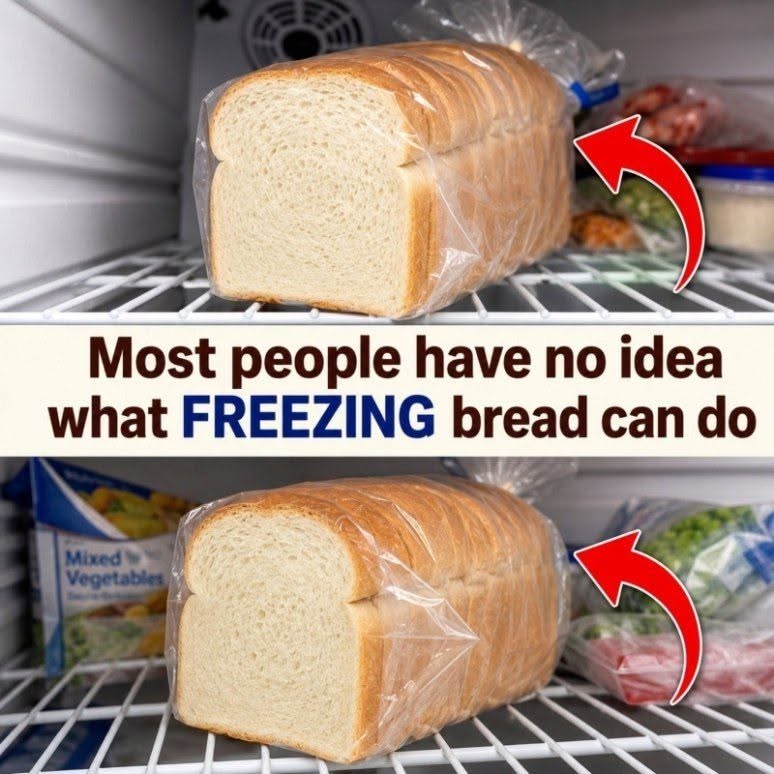
Nothing strange or dramatic happens—freezing bread is actually a very common way to keep it fresh longer.
🥶 What really happens when you freeze bread
When you put bread in the freezer:
- The water inside the bread turns into ice
- Microbial growth (mold and bacteria) stops
- The bread essentially goes into “pause mode”
So instead of going stale or molding, it stays stable for weeks or even months.
🍞 What changes after freezing
Once thawed, you might notice:
- Slightly drier texture (because moisture shifts during freezing)
- Less softness compared to fresh bread
- Sometimes a bit of crumbliness, depending on the type of bread
But nutritionally, it stays the same.
🧠 A useful detail most people don’t know
If you freeze bread and then toast it, it often:
- tastes almost like fresh
- has a better texture than simply thawing at room temperature
✔️ Best way to freeze bread
- Slice it before freezing (so you can take out only what you need)
- Wrap tightly or use a freezer bag to prevent freezer burn
- Reheat in a toaster or oven for best results
🚫 What it does NOT do
Freezing bread does NOT:
- make it healthier
- remove gluten or calories
- “improve” it chemically in any special way
🧠 Bottom line
Freezing bread is just a preservation method, not a transformation trick. It helps reduce waste and keeps bread usable longer, but it doesn’t change it into something new or magical.
If you want, I can also tell you how long different types of bread (naan, sandwich bread, sourdough, etc.) last in the freezer and the best way to thaw each one.