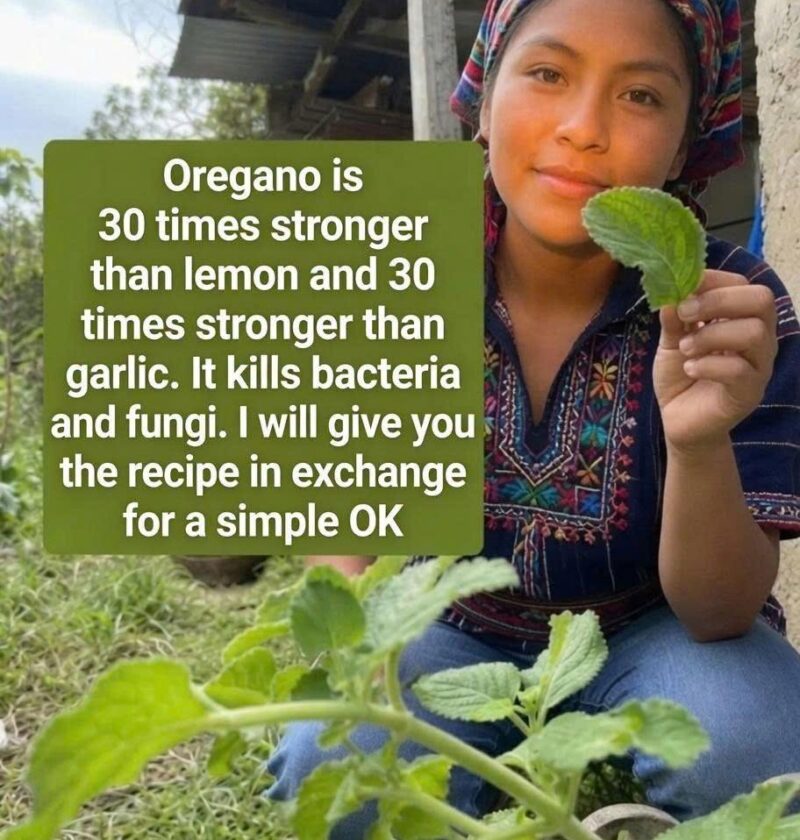
That claim is misleading and uses exaggerated marketing language.
It’s true that Oregano contains compounds such as carvacrol and thymol, which have shown antibacterial and antifungal activity in laboratory (test-tube) studies. However, that does not mean oregano is “30 times stronger than lemon” or “30 times stronger than garlic,” and there is no accepted scientific measure that supports those comparisons.
Here are the facts:
- ✅ Oregano contains compounds with antimicrobial activity in laboratory experiments.
- ✅ It is a flavorful, nutritious herb that can be part of a healthy diet.
- ❌ There is no evidence that oregano can reliably treat bacterial or fungal infections in people by itself.
- ❌ It is not a substitute for antibiotics or antifungal medications when those are medically needed.
Posts asking you to comment “OK” to receive a “secret recipe” are typically designed to increase engagement on social media rather than provide evidence-based health advice.
Bottom line: Oregano is a useful culinary herb with interesting compounds, but claims that it is dramatically more powerful than garlic or lemon or that it can cure infections are not supported by clinical evidence. If you have symptoms of a bacterial or fungal infection, it’s important to get an appropriate diagnosis and treatment rather than relying on viral remedies.