That headline is misleading.
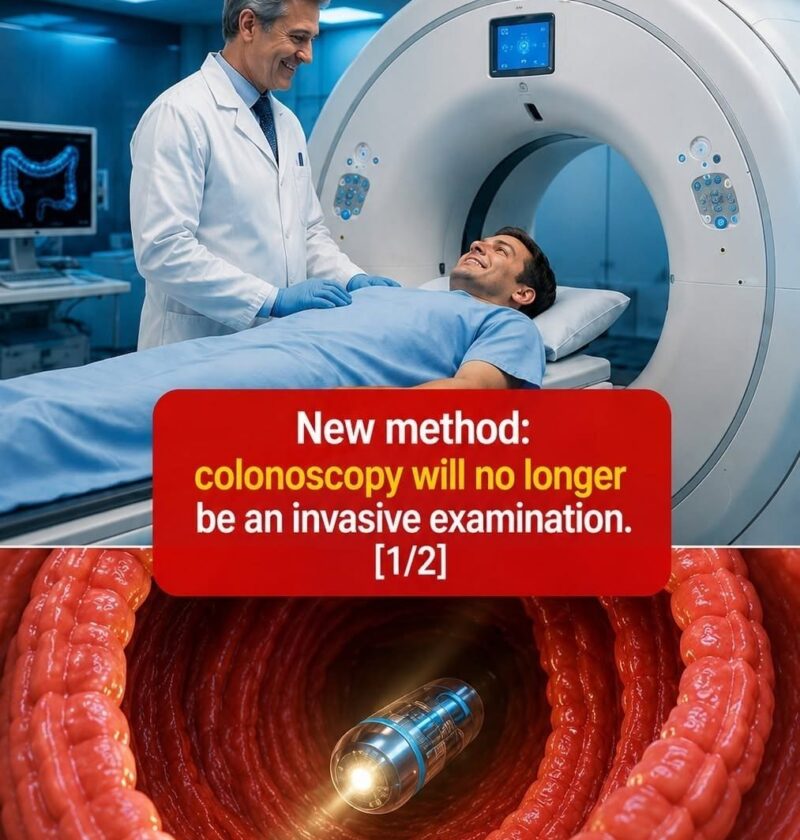
A colonoscopy is still an invasive medical procedure, and there is currently no “new method” that has replaced it as a fully non-invasive equivalent in routine practice.
A colonoscopy is important because it allows doctors to:
- directly see the inside of the colon
- take biopsies
- remove polyps (which can prevent cancer)
That combination is something non-invasive tests cannot fully do.
🧪 What newer methods actually exist
There are less invasive alternatives, but they are not replacements in all cases:
1) Stool DNA test (e.g., Cologuard-type tests)
- Checks stool for blood and cancer-related DNA changes
- Non-invasive
- Still needs colonoscopy if abnormal
Related condition: Colorectal cancer
2) CT colonography (“virtual colonoscopy”)
- Uses CT scan imaging
- No scope inserted into the colon
- Still requires bowel prep
- If anything abnormal is found → real colonoscopy is needed
3) Capsule endoscopy (camera pill)
- You swallow a small camera capsule
- Takes images of the digestive tract
- Limited use for colon screening in some cases
- Cannot remove polyps or take biopsies
⚠️ Why colonoscopy is still the gold standard
Even with new technologies, colonoscopy remains the best because it is:
- diagnostic + treatment in one procedure
- able to remove precancerous polyps immediately
- most accurate for detecting small lesions
🧠 Bottom line
- No new technology has made colonoscopy “non-invasive”
- There are less invasive screening options, but they are not complete replacements
- Colonoscopy is still the most reliable tool for colon cancer prevention and diagnosis
If you want, I can compare all colon cancer screening methods side-by-side so you can see which one fits different risk levels.