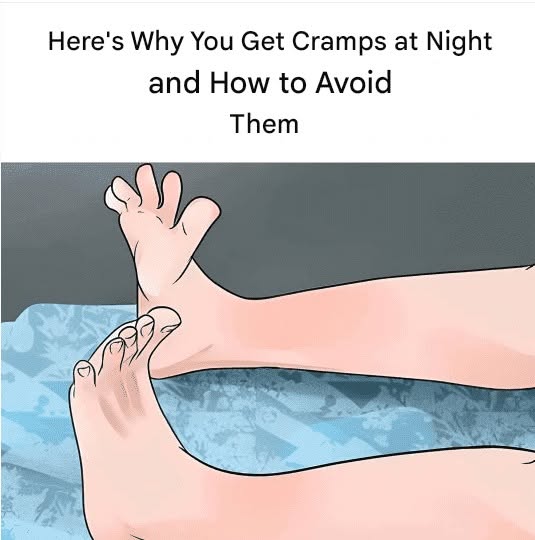
Night cramps (especially in the legs or feet) are very common, and there isn’t one single cause. They usually happen when a muscle suddenly contracts and won’t relax for a few seconds to minutes.
Here are the main reasons experts link to night cramps:
🦵 1) Muscle fatigue or overuse
- Long walking, standing, or exercise during the day
- Muscles become “overworked” and cramp at rest (often at night)
💧 2) Dehydration
- Not drinking enough water
- Loss of fluids from heat, sweating, or illness
- Can affect muscle and nerve function
⚡ 3) Electrolyte imbalance
Low levels of minerals like:
- potassium
- magnesium
- calcium
These are important for normal muscle relaxation.
Related condition: Electrolyte imbalance
🛌 4) Poor circulation or sleeping position
- Holding feet in a pointed position while sleeping
- Reduced blood flow in certain positions
- Can trigger calf or foot cramps
🧠 5) Nerve sensitivity
Sometimes nerves misfire during rest, especially in:
- older adults
- people with back problems
- people with nerve irritation
🩺 6) Medical conditions (less common)
Night cramps can be linked with:
- diabetes-related nerve changes
- thyroid disorders
- kidney problems
💊 7) Certain medications
Some medicines can increase cramp risk, including:
- diuretics (“water pills”)
- some cholesterol medications
- asthma medicines in rare cases
🧠 8) Age-related muscle changes
As we age:
- muscles shorten slightly
- tendons become less flexible
- cramps become more common at night
🚨 When to pay attention
See a doctor if cramps:
- happen very often
- are severe or worsening
- come with swelling, redness, or weakness
- affect walking during the day
🌙 Simple ways to reduce night cramps
- Stretch calves before bed
- Stay hydrated
- Light massage or warm compress
- Keep feet in a relaxed position while sleeping
🧠 Bottom line
Night cramps usually come from a mix of muscle fatigue, hydration issues, mineral balance, and sleep position—not one hidden disease.
If you want, tell me where your cramps happen (calf, foot, thigh), and I can suggest targeted stretches that work best for that exact area.