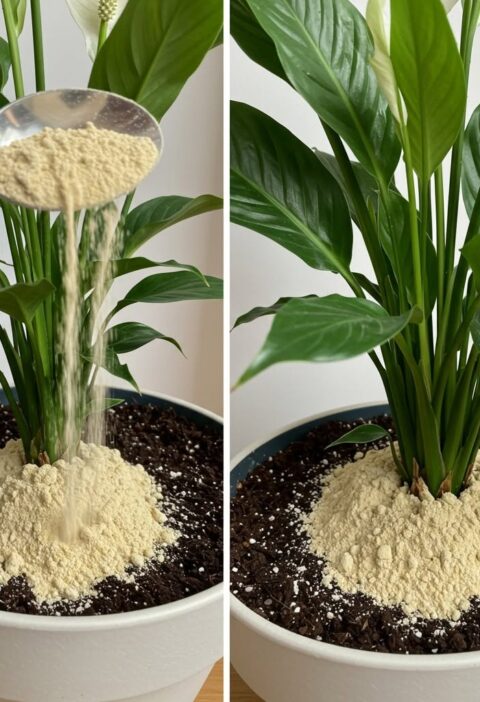
That “just a teaspoon and your orchid suddenly explodes with blooms” claim is almost certainly a viral gardening exaggeration.
Orchids don’t respond to one magic spoonful. Their flowering depends on steady conditions over weeks to months, not a quick fix.
What’s actually going on in most of these “miracle” hacks
These posts usually hide one of these:
- A diluted fertilizer (balanced orchid feed)
- A small amount of banana water, rice water, or sugar water (mostly not scientifically reliable)
- Or simply good care changes that were already happening (light, temperature, repotting)
The “teaspoon effect” is usually just coincidence timing.
🌸 What actually makes orchids bloom
Orchids (especially Phalaenopsis) typically bloom when:
- They get bright, indirect light
- They experience a slight temperature drop at night
- They are watered properly (not overwatered)
- They are fed weak orchid fertilizer regularly (not random doses)
- Their roots are healthy and not rotting
⚠️ Why random “spoon tricks” can be risky
- Sugar or kitchen mixtures can cause fungus and root rot
- Too much fertilizer can burn orchid roots
- Unbalanced “home remedies” often do more harm than good
🌿 Simple truth
If an orchid blooms after a “teaspoon trick,” it’s usually because:
The plant was already ready to bloom, and the timing just lined up.
If you want, tell me what orchid you have (Phalaenopsis, Dendrobium, etc.), and I can give you a real blooming schedule that actually works year after year.