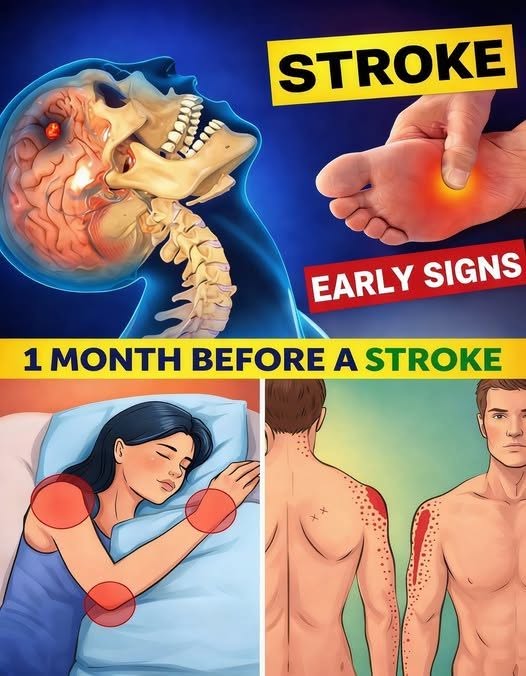
Headlines claiming there are “8 warning signs that appear one month before a stroke” are misleading. While some people experience warning symptoms in the days or weeks before a stroke, many strokes occur without any advance warning.
One important warning event is a Transient ischemic attack, which causes temporary stroke-like symptoms and is a medical emergency because it can precede a full stroke.
Possible warning signs
If any of these symptoms occur suddenly—even if they last only a few minutes and then disappear—seek emergency medical care immediately.
- Weakness or numbness in the face, arm, or leg, especially on one side.
- Difficulty speaking or understanding speech.
- Sudden vision loss or blurred vision in one or both eyes.
- Dizziness, loss of balance, or trouble walking.
- Severe headache with no obvious cause (particularly if abrupt and unusual).
- Confusion or difficulty thinking clearly.
- Sudden difficulty swallowing.
- Brief episodes of symptoms that resolve quickly (possible TIA).
9 ways to help reduce stroke risk
- Control high blood pressure, the most important modifiable risk factor.
- Don’t smoke, and avoid secondhand smoke.
- Stay physically active, aiming for regular exercise most days.
- Eat a heart-healthy diet, emphasizing fruits, vegetables, whole grains, legumes, and healthy fats while limiting excess salt and highly processed foods.
- Maintain a healthy weight.
- Manage diabetes by following your treatment plan and monitoring blood sugar.
- Treat high cholesterol with lifestyle changes and medications if prescribed.
- Limit alcohol and avoid recreational drugs that increase stroke risk.
- Take prescribed medications consistently, especially those for blood pressure, cholesterol, diabetes, or blood thinners if recommended.
Remember FAST
A simple way to recognize a stroke is FAST:
- Face drooping
- Arm weakness
- Speech difficulty
- Time to call emergency services immediately
Bottom line
There is no reliable “one-month countdown” before a stroke. However, sudden neurological symptoms—even if they disappear—should never be ignored, as they may be a warning of an impending stroke. Early evaluation and treatment can greatly reduce the risk of a more serious stroke.