Urine color can give useful clues about hydration, diet, and sometimes underlying health issues. It’s not a diagnosis on its own, but it can be an early warning sign.
Here’s a clear breakdown:
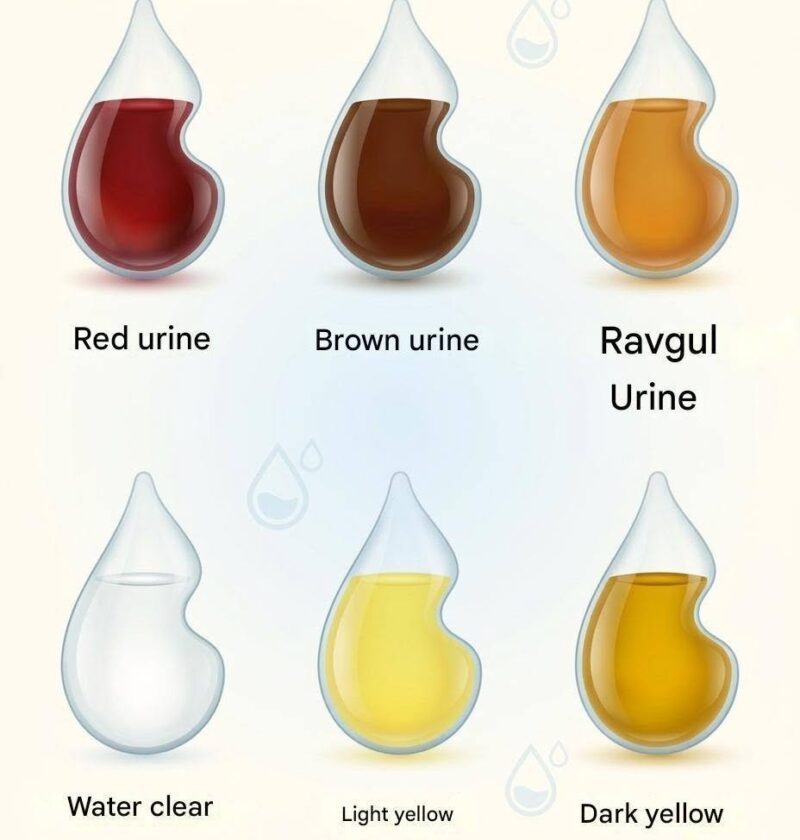
💧 🟡 1. Pale yellow (straw color) — Healthy range
- Usually means good hydration
- Normal, ideal urine color
- Indicates balanced fluid intake
💛 2. Dark yellow — Mild dehydration
- You may need more water
- Common after sweating, heat, or not drinking enough fluids
- Often seen in hot climates or after exercise
🟠 3. Amber or honey-colored — More dehydration
- Stronger sign of low fluid intake
- Urine is more concentrated
- If persistent, increase water intake
🟤 4. Brown or cola-colored — Possible concern
Can be caused by:
- Severe dehydration
- Certain foods or medications
- Liver or muscle breakdown issues
- Sometimes kidney-related problems
If this continues, it should be checked.
🟥 5. Pink or red — Blood possible
May indicate:
- Urinary tract infection
- Kidney stones
- Urinary tract injury
- Certain foods (like beetroot) can also cause harmless color change
👉 If not food-related, this should be medically evaluated.
🟢 6. Blue or green — Rare
- Sometimes due to medications or dyes
- Rare bacterial infections
- Usually not serious but worth checking if unexplained
⚪ 7. Very clear (like water) — Overhydration or high fluid intake
- You may be drinking more water than needed
- Occasionally linked with electrolyte imbalance if extreme
⚠️ Important warning signs
Seek medical advice if urine color change is accompanied by:
- Pain or burning during urination
- Fever
- Strong foul smell
- Persistent red/brown color
- Back or side pain (possible kidney issue)
These may be linked to conditions affecting the urinary system, including Kidney disease.
🧠 Bottom line
- Light yellow = healthy
- Dark = dehydration
- Red/brown (not food-related) = check with a doctor
If you want, I can also explain what urine smell, foam, or frequency changes mean, which are also useful health signals people often miss.