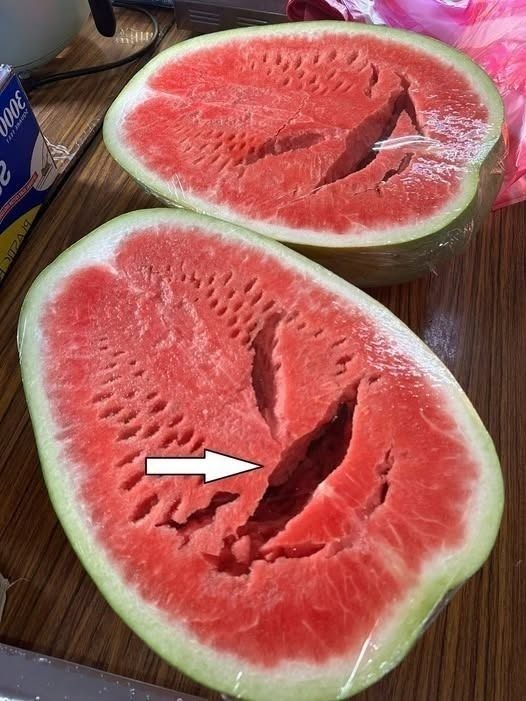
That headline is another viral exaggeration. A cracked-looking watermelon is not automatically dangerous, and it definitely doesn’t mean you must “stop eating it immediately” in all cases.
Here’s what it can actually mean:
🍉 Why a watermelon might have cracks inside
1) Natural “growth cracks” (most common)
Some watermelons develop internal cracks due to:
- Rapid growth from too much water or fertilizer
- Temperature changes during ripening
These cracks can look alarming but are usually harmless structural changes, not spoilage.
2) Overripening
If a watermelon is left too long:
- Flesh can become soft or split
- Texture may look “grainy” or uneven
- Taste may be less sweet
Still usually safe if it smells and tastes normal.
3) Poor storage or heat stress
After harvesting, improper storage can cause:
- Internal breakdown of flesh
- Small voids or fissures
4) Actual spoilage (this is the one to watch for)
You should not eat it if you notice:
- Sour or fermented smell
- Slimy texture
- Mold (white, green, or black spots)
- Bubbling or “alcohol-like” taste
This can indicate microbial growth.
🧠 Key takeaway
Cracks alone ≠ danger.
What matters is smell, texture, and taste, not just appearance.
🚩 When to discard it
Throw it away if you notice:
- Off or alcoholic smell
- Visible mold
- Mushy, leaking, or slimy flesh
If you want, I can also tell you how to pick a perfect watermelon at the market so you avoid disappointing ones like this entirely.