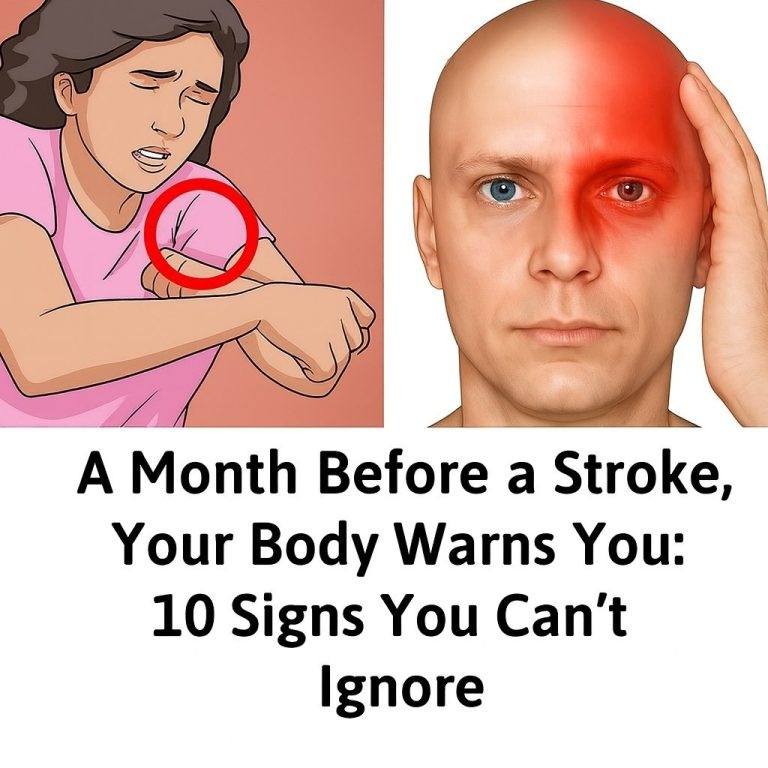
A Month Before a Stroke, Your Body May Give Warning Signs: 10 Symptoms You Should Never Ignore
Part 1: Understanding Early Stroke Warning Signals and Risk Awareness
(Original, Copyright-Free, SEO-Optimized Health Content)
“A month before a stroke, your body warns you…” — but how accurate is this idea?
You’ve likely seen alarming posts claiming that the body clearly signals an upcoming stroke weeks in advance. While this sounds straightforward, the reality is more complex.
A stroke is often a sudden medical event caused by interrupted blood flow to the brain. However, in some cases, the body may show warning signs of reduced blood flow or “mini-strokes” (transient ischemic attacks, or TIAs) before a major stroke occurs.
These early symptoms should never be ignored, because they can indicate increased risk and the need for urgent medical evaluation.
What Is a Stroke? (Simple Explanation)
A stroke happens when blood flow to part of the brain is blocked or reduced, or when a blood vessel in the brain bursts.
There are two main types:
- Ischemic stroke (most common): caused by a blockage
- Hemorrhagic stroke: caused by bleeding in the brain
Without oxygen, brain cells begin to die quickly, making fast treatment critical.
Can the Body Really Warn You a Month in Advance?
In some cases, people experience transient ischemic attacks (TIAs) days or weeks before a major stroke.
A TIA is often called a “mini-stroke” because:
- Symptoms are similar to a stroke
- They are temporary and may disappear within minutes or hours
- They signal increased stroke risk in the near future
Not everyone experiences TIAs, but when they occur, they are an important warning sign.
10 Warning Signs That May Indicate Increased Stroke Risk
1. Sudden Weakness or Numbness
Especially on one side of the face, arm, or leg.
2. Slurred or Confused Speech
Difficulty speaking or understanding others.
3. Sudden Vision Problems
Blurred vision or loss of vision in one or both eyes.
4. Severe, Unexplained Headache
A sudden intense headache without a known cause.
5. Dizziness or Loss of Balance
Trouble walking, coordination issues, or feeling unsteady.
6. Temporary Paralysis or Heavy Limb Feeling
Even if it resolves quickly, it may signal a TIA.
7. Memory Confusion or Disorientation
Sudden difficulty understanding time, place, or situation.
8. Difficulty Swallowing
Trouble eating or controlling throat muscles.
9. Sudden Fatigue or Weakness
Unusual exhaustion not explained by activity.
10. Brief Episodes of Stroke-like Symptoms
Symptoms that come and go quickly should never be ignored.
Why These Symptoms Matter
Even if symptoms disappear, they may indicate:
- Reduced blood flow to the brain
- Blocked or narrowing arteries
- Higher risk of a full stroke
- Underlying cardiovascular disease
A TIA is often considered a medical warning signal, not a harmless event.
Major Risk Factors for Stroke
Certain conditions increase the likelihood of stroke, including:
- High blood pressure
- Diabetes
- High cholesterol
- Smoking
- Obesity
- Sedentary lifestyle
- Heart disease
- Excess alcohol consumption
- Family history of stroke
Managing these risk factors can significantly reduce stroke risk.
The FAST Method: Recognizing a Stroke Quickly
Doctors often recommend remembering FAST:
- F – Face: drooping on one side
- A – Arms: inability to raise one arm
- S – Speech: slurred or strange speech
- T – Time: call emergency services immediately
Time is critical—early treatment can save brain function and lives.
What To Do If You Notice These Signs
If you or someone experiences stroke-like symptoms:
- Seek emergency medical help immediately
- Do not wait for symptoms to disappear
- Note the time symptoms began
- Avoid self-medication
Even temporary symptoms require urgent evaluation.
Common Myths About Stroke Warning Signs
Myth: Stroke Always Happens Without Warning
Fact: Some people experience warning signs like TIAs.
Myth: Symptoms That Go Away Are Not Serious
Fact: Temporary symptoms can still indicate high risk.
Myth: Only Elderly People Have Strokes
Fact: Stroke can occur at any age, especially with risk factors.
The Bottom Line
While stroke often happens suddenly, some individuals may experience warning signs days or weeks before due to reduced blood flow or transient ischemic attacks. These symptoms should always be taken seriously.
Recognizing early signs and managing risk factors can play a key role in prevention.
See More
Sometimes the body doesn’t give a dramatic warning—it gives small signals that should never be ignored.
Part 2: Simple Heart and Brain Support Smoothie
Berry Beet Brain Health Drink
Ingredients
- 1/2 cup beetroot (boiled or raw, chopped)
- 1/2 cup mixed berries (strawberries or blueberries)
- 1 cup water or coconut water
- 1 teaspoon lemon juice
- 1 teaspoon honey (optional)
Instructions
- Add all ingredients to a blender.
- Blend until smooth.
- Strain if desired.
- Serve chilled.
Preparation Time
5 minutes
Category
Heart Health Drink • Brain Nutrition Smoothie • Antioxidant Beverage
Sources
This content is for educational purposes only and is not a substitute for emergency medical care.