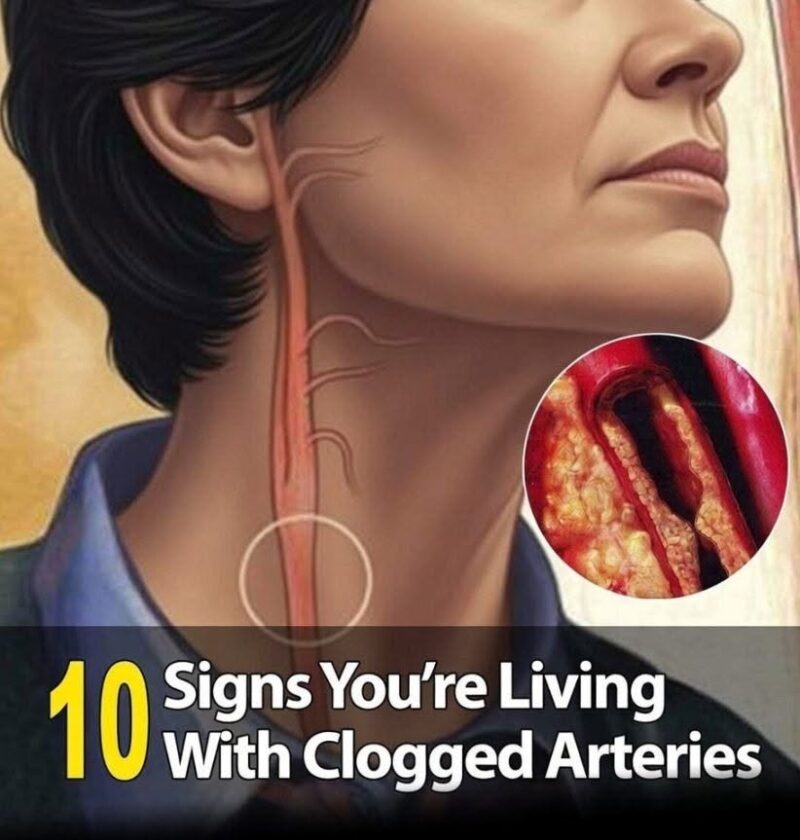
“Blocked arteries” usually refers to Atherosclerosis, a condition where fatty deposits (plaques) narrow or harden the arteries. It often develops silently over years, so symptoms—when they appear—can be important warning signs.
Here are 10 indicators you shouldn’t ignore:
1) Chest pain or pressure (angina)
Often felt during activity or stress, and may ease with rest. It can feel like tightness, heaviness, or squeezing.
2) Shortness of breath
Especially during light activity or while lying down. It may suggest reduced blood flow to the heart.
3) Fatigue that feels unusual
Extreme tiredness from simple tasks can be a sign the heart isn’t pumping efficiently.
4) Pain in legs when walking (claudication)
Cramping or aching in calves or thighs that improves with rest may indicate poor circulation in leg arteries.
5) Numbness or weakness in limbs
Reduced blood flow can affect nerves and muscle function.
6) Cold hands or feet
Poor circulation can make extremities feel unusually cold compared to the rest of the body.
7) Slow-healing wounds
Cuts or sores on feet or legs that take a long time to heal can signal poor arterial blood flow.
8) Dizziness or lightheadedness
Reduced blood flow to the brain can sometimes cause these symptoms.
9) Heart palpitations
Irregular or rapid heartbeat may occur when the heart is under strain.
10) Pain in jaw, neck, or back (especially with chest discomfort)
In some people—especially women—heart-related pain can show up in these areas instead of the chest.
Important context
These symptoms don’t always mean blocked arteries—they can have other causes too. But chest pain, sudden shortness of breath, or fainting are urgent warning signs and should be checked immediately.
If you want, I can also explain how doctors actually test for artery blockage (it’s more straightforward than most people think).