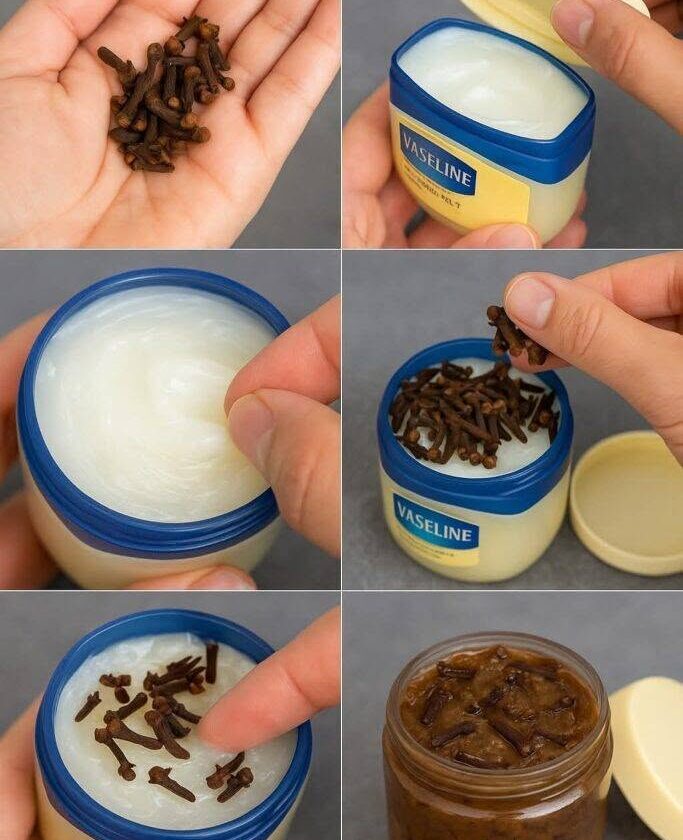
That “mix cloves with Vaseline and it fixes everything” claim is one of those viral home remedies that sounds mysterious but isn’t supported by good medical evidence.
What people claim it does
You’ll see it promoted online for things like:
- skin infections or acne
- pain relief (joints, teeth, headaches)
- skin lightening or “repair”
- antifungal or antibacterial effects
What’s actually true
- Cloves contain a compound called eugenol, which does have mild antiseptic and numbing properties.
- Vaseline (petroleum jelly) is mainly an occlusive moisturizer—it locks moisture in but doesn’t treat infections or pain.
The problem with mixing them
- There’s no clinical evidence that the mixture treats any medical condition.
- Clove oil (especially undiluted) can irritate or burn skin, especially on sensitive areas.
- Mixing it into Vaseline doesn’t standardize dosage or safety.
- It can delay proper treatment if someone uses it for infections, dental pain, or skin disease.
When it might feel like it “works”
- Vaseline can soothe dry or irritated skin
- Clove’s mild numbing effect can temporarily reduce sensation
So people sometimes mistake short-term soothing for real treatment.
Bottom line
It’s not a “secret cure”—just a mix of a moisturizer and a mildly numbing spice. Safe for general skin moisturization in very small, well-tolerated amounts, but not a treatment for disease or pain conditions.
If you tell me what you saw it recommended for (dark spots, acne, pain, etc.), I can suggest safer, evidence-based alternatives.