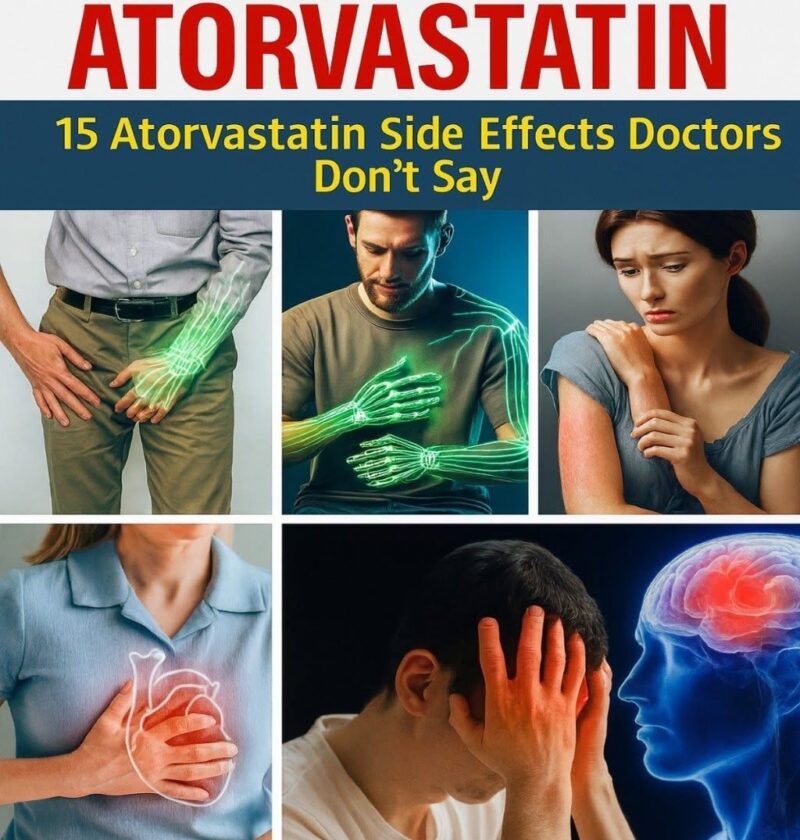
Atorvastatin: What it actually is
Atorvastatin is a statin medication used to:
- Lower LDL (“bad”) cholesterol
- Reduce risk of heart attack and stroke
- Help prevent cardiovascular disease
It is one of the most widely studied and commonly prescribed heart medications in the world.
Real side effects (evidence-based)
Common (usually mild)
- Muscle aches or soreness
- Mild digestive issues (nausea, constipation, diarrhea)
- Headache
- Mild fatigue
Most people either don’t get symptoms or have mild ones that improve over time.
Less common
- Sleep disturbances
- Mild increase in blood sugar (important for diabetics to monitor)
- Joint pain
Rare but important
- Significant muscle breakdown (rhabdomyolysis — very rare)
- Liver enzyme elevation (usually monitored by blood tests)
- Severe allergic reactions (extremely rare)
What “hidden dangers” claims get wrong
1. Side effects are not hidden
Atorvastatin is heavily researched. Doctors regularly monitor:
- muscle symptoms
- liver function
- cholesterol response
Nothing is secretly withheld.
2. Risk is often exaggerated online
Serious side effects are rare, while heart attack and stroke prevention benefits are well-proven and significant.
3. No medication is “risk-free”
Even common medicines like painkillers have side effects—but context matters: benefit vs risk.
When to contact a doctor
Seek medical advice if you experience:
- severe unexplained muscle pain or weakness
- dark-colored urine
- yellowing of skin/eyes
- unusual fatigue that doesn’t improve
Bottom line
Atorvastatin has known, well-studied side effects—not hidden ones. For most people at risk of heart disease, its benefits in preventing heart attacks and strokes outweigh the risks.
If you want, I can also break down how to reduce statin side effects or what alternatives exist if someone can’t tolerate it.