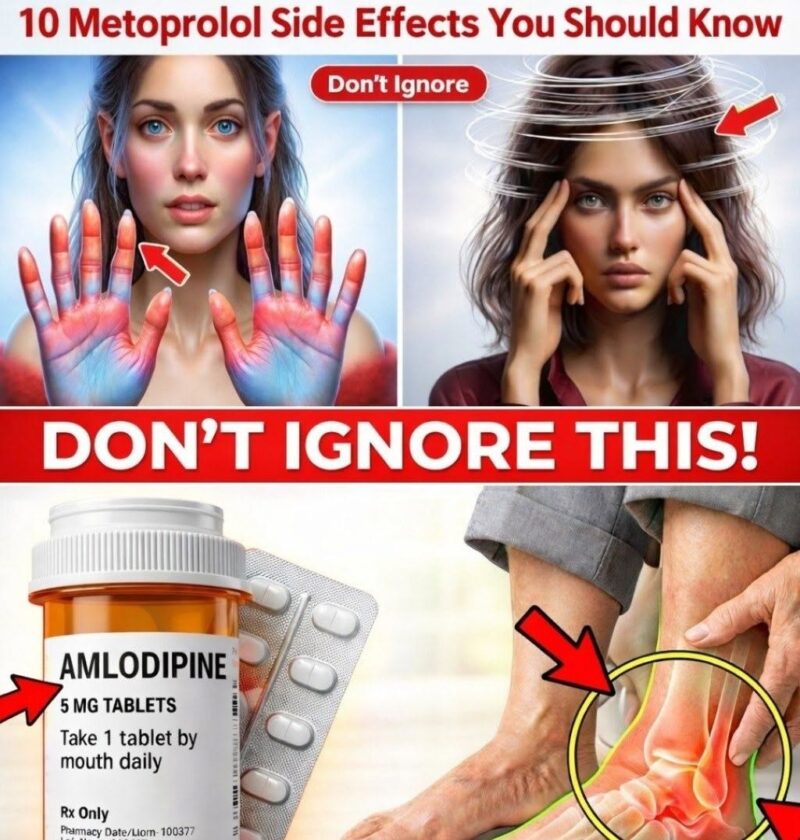
Headlines like “The 10 Metoprolol Side Effects Your Doctor is PRAYING You Don’t Discover” are sensational and misleading. Healthcare professionals generally discuss the important risks and benefits of medications, even if they can’t cover every possible side effect in detail.
Metoprolol is a beta blocker commonly prescribed to treat conditions such as high blood pressure, certain heart rhythm disorders, chest pain, and heart failure.
Common side effects
Many people tolerate metoprolol well, but some experience:
- Tiredness or fatigue
- Dizziness or lightheadedness, especially when standing up
- A slower heart rate
- Cold hands and feet
- Mild digestive symptoms, such as nausea or diarrhea
Less common side effects
Some people may notice:
- Sleep disturbances or vivid dreams
- Mood changes or depression (the evidence is mixed)
- Reduced exercise tolerance
- Sexual dysfunction
Rare but serious side effects
Seek prompt medical attention if you develop:
- Fainting or severe dizziness
- Difficulty breathing or wheezing, especially if you have asthma or another lung condition
- A very slow heartbeat with symptoms
- Swelling of the face, lips, tongue, or throat (a possible allergic reaction)
Important precautions
- Don’t stop metoprolol suddenly. Abruptly discontinuing it can cause a rebound increase in heart rate or blood pressure and may worsen chest pain or increase the risk of a heart attack in some people. If it needs to be stopped, your healthcare provider will usually recommend tapering the dose.
Bottom line
Metoprolol has known side effects, but the idea that doctors are hiding them is inaccurate. For many people, the medication substantially reduces the risk of serious cardiovascular problems, and treatment decisions are based on balancing those benefits against the potential risks.
If you’re taking metoprolol and have a specific symptom, tell me:
- your dose (for example, 25 mg, 50 mg, or 100 mg),
- how long you’ve been taking it,
- and what you’re experiencing.
I can help explain whether it’s a recognized side effect and whether it warrants contacting your healthcare provider promptly.