The claim is partly true. White vinegar can help with laundry, but it’s not a miracle whitener, and using it incorrectly can reduce cleaning performance or damage some appliances.
How to use vinegar correctly
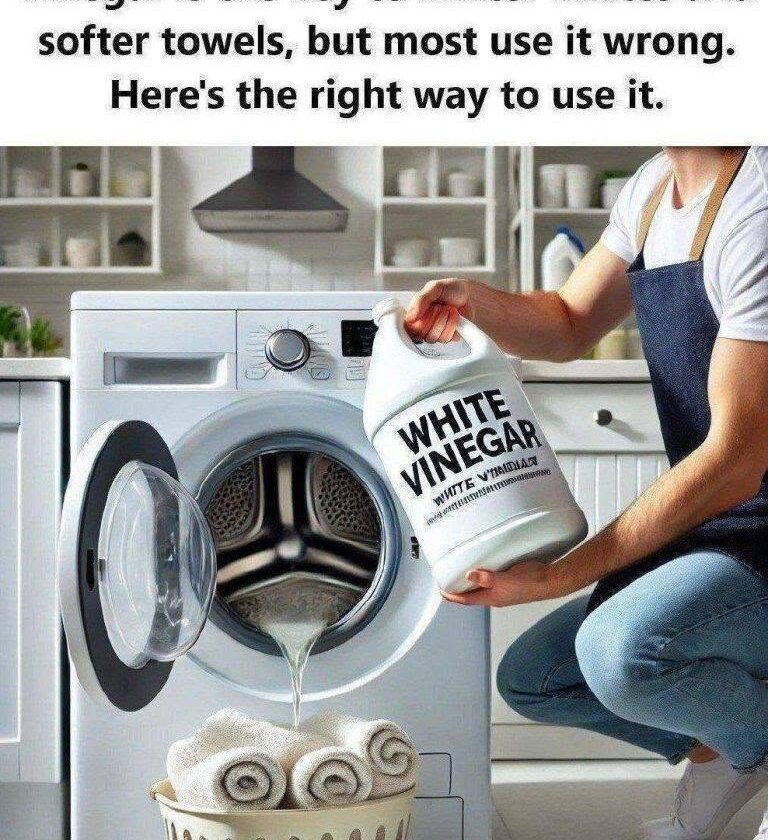
For softer towels
- Add ½ cup (120 mL) of white distilled vinegar to the fabric softener dispenser or during the rinse cycle.
- Vinegar helps remove detergent residue that can make towels feel stiff.
- Don’t use it every wash—occasional use is usually enough.
For brighter whites
- Add ½–1 cup (120–240 mL) of white vinegar to the wash cycle along with your regular detergent.
- It can help remove mineral deposits, soap residue, and some odors, making white fabrics appear brighter.
- It does not bleach fabric or remove deep yellowing like oxygen bleach can.
Common mistakes to avoid
- Don’t mix vinegar with chlorine bleach. Combining them releases chlorine gas, which is toxic.
- Don’t rely on vinegar as your only detergent. It doesn’t remove oils and dirt as effectively as laundry detergent.
- Use only white distilled vinegar. Colored or flavored vinegars can stain fabrics.
- Check your washing machine’s manual. Frequent vinegar use may not be recommended by some manufacturers because it can affect certain rubber seals over time.
For heavily yellowed whites
An oxygen-based bleach (not chlorine bleach) is generally more effective and gentler on fabrics than vinegar alone.
Bottom line: White vinegar is a useful laundry aid for reducing odors, softening towels, and helping remove detergent residue. However, it won’t restore severely yellowed whites by itself, and it should never be mixed with chlorine bleach.