Small White Spots on Arms and Legs: What They Mean and What You Should Know
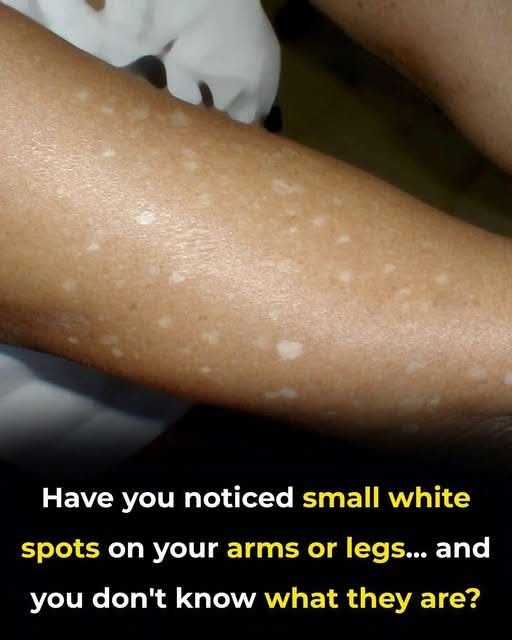
Small white patches or spots on the arms and legs are a common skin concern, and in most cases they are not dangerous. However, they can appear for different reasons—some harmless, some requiring treatment.
Understanding the possible causes helps you know when to simply monitor the skin and when to see a dermatologist.
🌤️ What Causes Small White Spots on Skin?
White spots happen when the skin loses pigment (melanin) or when pigmentation becomes uneven. This can be due to sun exposure, fungal infection, autoimmune changes, or simple skin aging.
Below are the most common causes.
☀️ 1. Idiopathic Guttate Hypomelanosis (Sun-Related White Spots)
One of the most common causes in adults is a condition called Idiopathic Guttate Hypomelanosis.
Key features:
- Small white “confetti-like” spots
- Common on arms and legs
- More noticeable with age
- Often linked to long-term sun exposure
Why it happens:
Over time, UV rays from the sun slowly reduce melanin in small patches of skin, especially in exposed areas.
Is it dangerous?
No. It is cosmetic only and does not spread in a harmful way.
🍄 2. Fungal Infection (Tinea Versicolor)
Another common cause is a yeast overgrowth called Tinea Versicolor.
Signs include:
- Light or white patches on skin
- Slight scaling or dryness
- Mild itching in some cases
- More visible after sun exposure
Cause:
A naturally occurring skin yeast becomes overactive, affecting skin pigmentation.
Treatment:
Usually treated with antifungal creams or medicated washes prescribed by a doctor.
🎯 3. Vitiligo (Loss of Pigment Cells)
A more noticeable cause is Vitiligo, an autoimmune condition.
Symptoms:
- Clearly defined white patches
- Can appear on arms, legs, face, hands
- Spots may slowly increase in size
- Hair in affected area may turn white
Why it happens:
The immune system mistakenly attacks melanocytes (pigment-producing cells).
Is it serious?
It is not physically harmful, but it may affect appearance and confidence.
🧴 4. Dry Skin or Post-Inflammatory Hypopigmentation
White spots can also appear after:
- Eczema
- Minor skin injuries
- Scratches or inflammation
This is called post-inflammatory hypopigmentation.
Features:
- Light patches where skin healed
- Often temporary
- Gradually returns to normal color
🌞 5. Sun Damage and Uneven Tanning
Long-term sun exposure can also cause uneven pigmentation:
- Some areas tan normally
- Others lose pigment over time
- Leads to patchy white appearance
🧠 When Should You Be Concerned?
You should consider seeing a dermatologist if:
- Spots are spreading quickly
- They become larger over time
- Multiple new patches appear suddenly
- There is itching, scaling, or discomfort
- Family history of autoimmune skin disease
🩺 Diagnosis: How Doctors Identify the Cause
A skin specialist may use:
- Visual examination
- Wood’s lamp test (UV light examination)
- Skin scraping (to check fungal infection)
- Rarely, a biopsy
Accurate diagnosis is important because treatment depends on the cause.
💡 Treatment Options (Depends on Cause)
There is no single treatment for all white spots. Common approaches include:
For fungal infections:
- Antifungal creams or shampoos
For vitiligo:
- Medicinal creams (steroids or immune-modulators)
- Light therapy in some cases
For sun-related spots:
- Usually no medical treatment needed
- Cosmetic creams or laser options if desired
For dry skin-related spots:
- Moisturizers and skin barrier repair
🌿 Can Diet or Vitamins Help?
No vitamin can directly “erase” white spots, but skin health may improve with:
- Vitamin B12
- Vitamin D
- Antioxidants (fruits and vegetables)
These support overall skin function but are not a cure for pigment disorders.
📌 Key Takeaway
Small white spots on arms and legs are usually caused by:
- Sun exposure (most common)
- Mild fungal infection
- Autoimmune pigment loss
- Skin healing changes
Most cases are harmless, but persistent or spreading patches should be checked by a dermatologist for proper diagnosis.
If you want, I can also:
- identify your condition from a description or photo (non-diagnostic guidance)
- or write a SEO blog post titled “How to Remove White Spots on Skin Naturally”
- or create a treatment comparison chart (home remedies vs medical options)