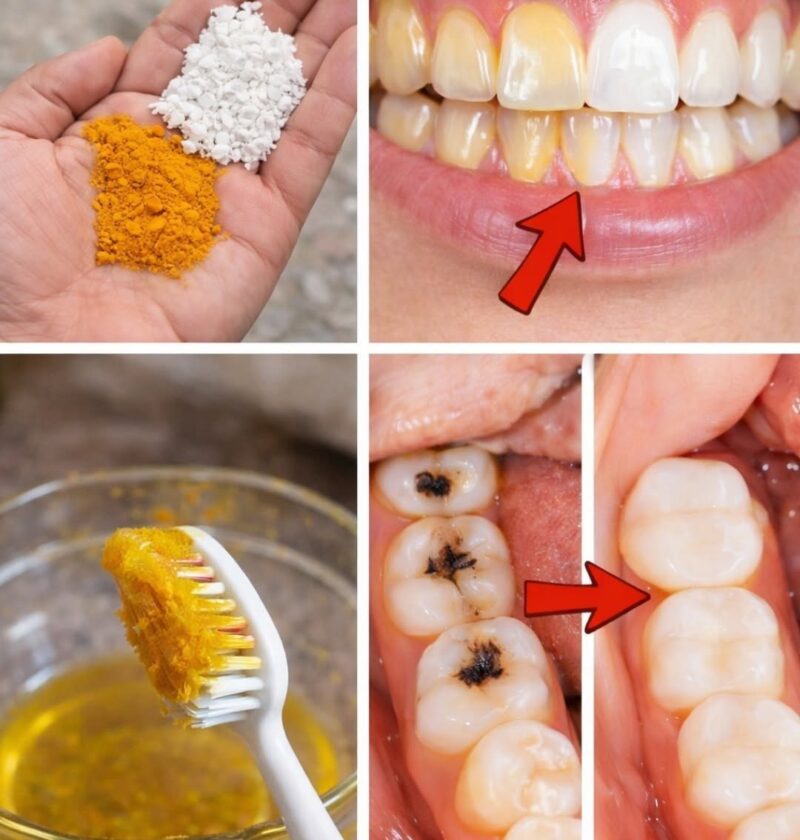
Turmeric for teeth whitening is a popular “natural remedy,” but the short answer is: it does not truly whiten teeth in the way people expect.
What turmeric actually does
Turmeric (curcumin) is a yellow spice. People rub it on teeth or use it in DIY pastes claiming it removes stains.
However:
- Turmeric is strongly pigmented (yellow-orange)
- It can temporarily make teeth look cleaner after brushing, but this is mostly due to scrubbing, not bleaching
- It does not change the natural color of enamel
What science says
- There is no strong clinical evidence that turmeric whitens teeth
- Some studies suggest curcumin has antibacterial and anti-inflammatory properties, which may help gum health slightly
- But it is not a proven whitening agent like hydrogen peroxide-based dental treatments
Possible downsides
Using turmeric on teeth regularly may:
- Stain toothbrushes, gums, and even dental fillings
- Leave a yellow residue in the mouth if not rinsed properly
- Cause mild abrasion if used as a gritty paste too often
Why people think it works
- Brushing (no matter what you use) removes surface debris
- This can make teeth feel smoother and look slightly brighter temporarily
- Social media exaggerates this effect into “whitening”
What actually works for whitening
Dentist-supported options include:
- Hydrogen peroxide or carbamide peroxide whitening gels
- Professional dental cleaning (removes tartar and stains)
- Whitening toothpaste (mild, gradual effect)
Bottom line
Turmeric may help oral hygiene slightly, but it is not a real teeth-whitening treatment and should not replace proven dental care.
If you want, I can suggest safe, affordable ways to whiten teeth at home without damaging enamel.