That warning is mostly exaggerated clickbait.
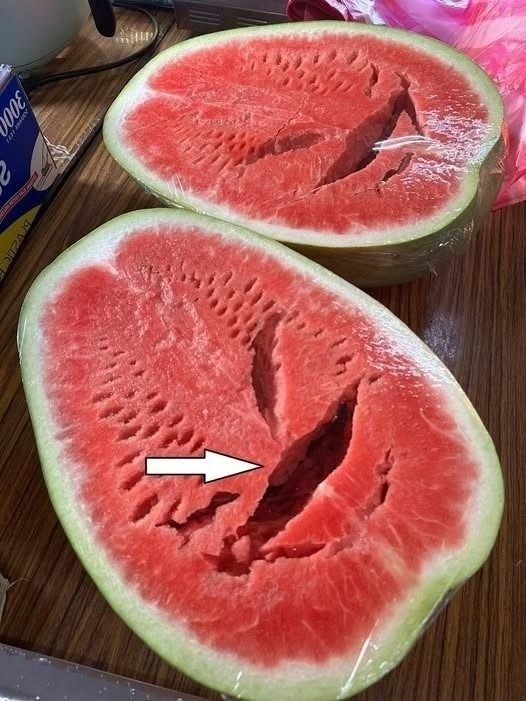
Seeing cracks or unusual patterns inside a watermelon doesn’t automatically mean it’s dangerous—but it can sometimes signal quality or growing issues.
🍉 What “cracks” in a watermelon usually mean
1. Natural growth stress (common, harmless)
Watermelon can develop internal cracks due to:
- Irregular watering (dry → sudden heavy water)
- Rapid growth
- Temperature changes
👉 These are usually safe to eat, though texture may be a bit off.
2. Hollow heart (very common)
- Internal splitting or voids
- Caused by poor pollination or growth imbalance
- Completely non-harmful, just cosmetic/texture issue
3. Over-ripening
- Flesh may become grainy or separated
- Taste can be mushy or less fresh
Not dangerous, but quality is poor.
4. Rare spoilage (this is when you should stop eating)
Throw it away if you notice:
- Sour or fermented smell
- Slimy texture
- Mold (white, green, or black spots)
- Bubbling or “alcohol-like” taste
These can indicate bacterial or fungal spoilage.
⚠️ Key truth
- Cracks alone = usually not dangerous
- Smell, texture, and mold = real safety indicators
🧠 Bottom line
The claim “stop eating immediately if you see cracks” is too absolute and misleading. Most cracked patterns are just growth issues, not contamination.
If you want, I can show you how to pick a perfect watermelon before cutting it so you avoid bad ones entirely.