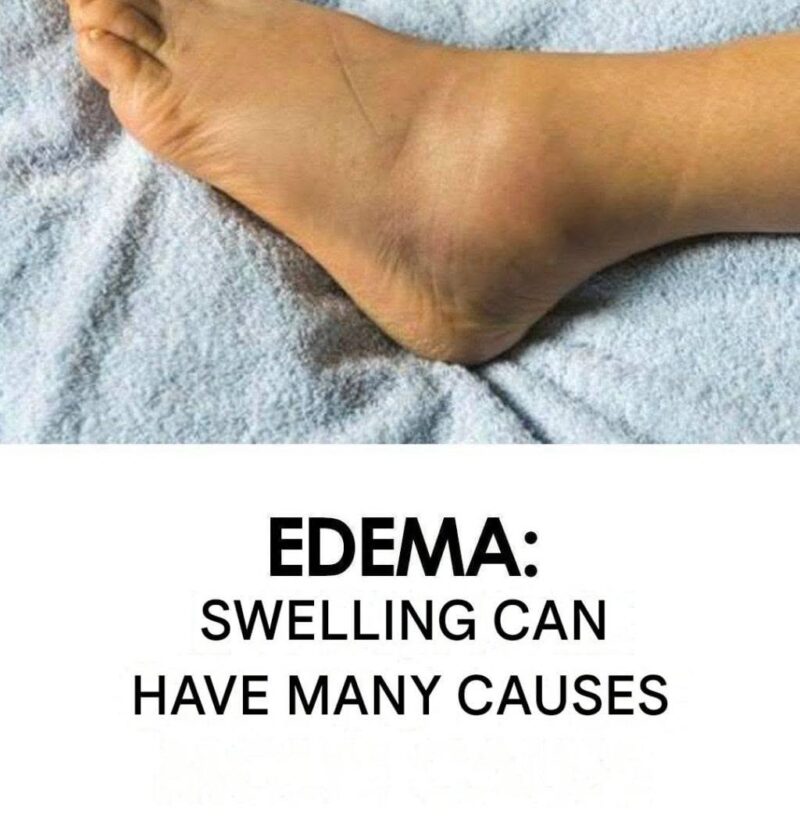
Edema is a medical term for swelling caused by fluid trapped in the body’s tissues. It often shows up in the feet, ankles, legs, hands, or even the face.
Edema
While mild swelling can be harmless (like after standing too long), certain patterns can signal something more serious happening inside the body.
⚠️ Signs of edema that should not be ignored
1. Sudden or rapidly worsening swelling
- Swelling that appears quickly over hours or days
- Especially concerning if it keeps getting worse
2. Swelling in one leg only
- Could suggest a blood clot (deep vein thrombosis)
- Often accompanied by pain, warmth, or redness
3. Shortness of breath with swelling
- May indicate heart or lung problems
- Especially serious if lying down makes breathing harder
4. Puffy face or swollen eyes in the morning
- Can be linked to kidney issues or fluid imbalance
5. Tight, shiny skin or difficulty moving joints
- Skin may look stretched or feel uncomfortable
- Can signal significant fluid buildup
🧠 Common underlying causes
Edema is not a disease itself—it’s a symptom. Causes can include:
- Heart problems (fluid backup)
- Kidney disease (fluid retention)
- Liver disease
- Venous insufficiency (poor circulation)
- Certain medications (like blood pressure drugs)
🚨 When to seek urgent care
Get medical attention quickly if swelling comes with:
- Chest pain
- Breathing difficulty
- One-sided leg swelling and pain
- Sudden severe swelling
💡 Key takeaway
Edema can be mild and temporary, but persistent, one-sided, or sudden swelling is a warning sign that should not be ignored.
If you want, I can explain how to tell harmless swelling vs dangerous swelling step-by-step or what doctors typically check first.