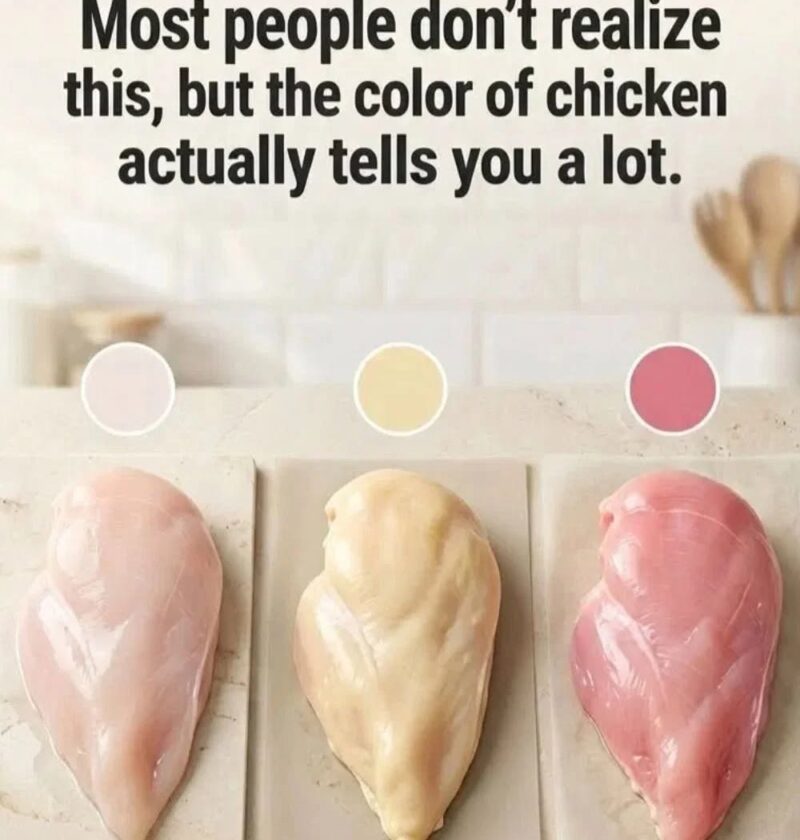
That kind of post is usually hinting at a myth, not a real food science rule.
🍗 Does chicken color indicate quality?
Not reliably.
Chicken “color” can vary for several normal reasons that have nothing to do with quality or safety:
🐔 1. Breed differences
Some chickens naturally have:
- Whiter meat
- Slightly yellow skin
- Different fat distribution
This is genetics, not quality.
🌽 2. Diet (especially yellow skin)
Yellowish skin can come from:
- Corn or carotenoid-rich feed
It affects color only, not safety or “freshness.”
❄️ 3. Storage and temperature effects
- Frozen or chilled chicken can look paler
- Exposure to air can slightly change surface color
Still safe if properly stored.
🧫 4. What actually matters for quality
Instead of color, check:
- Smell (should be neutral, not sour or rotten)
- Texture (firm, not slimy)
- Expiry date and storage conditions
- Proper cooking temperature
⚠️ Important safety note
Chicken color alone does NOT tell you:
- If it’s fresh
- If it’s safe
- If it’s “high quality”
🧠 Bottom line
The idea that chicken color reveals quality is mostly a social media simplification. Real quality depends on handling, freshness, and storage—not color alone.
If you want, I can explain:
🍗 How to tell if chicken is unsafe
🍗 Or why supermarket chicken sometimes looks different from farm chicken