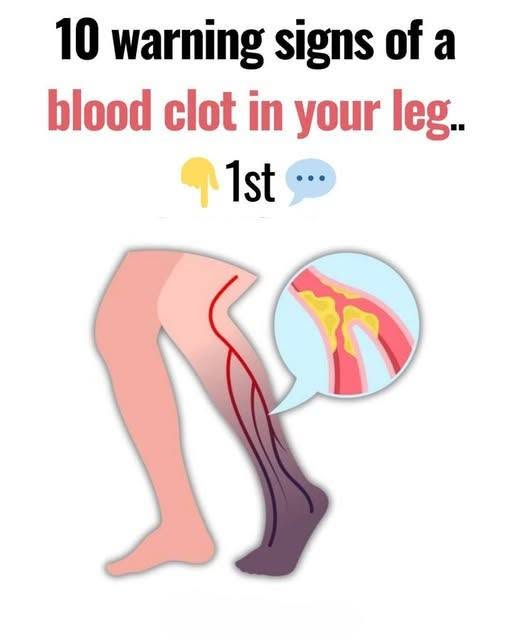
A blood clot in a leg vein is called Deep vein thrombosis (DVT). It can be serious because part of the clot can travel to the lungs and cause a Pulmonary embolism.
Many online lists exaggerate or include symptoms that aren’t specific to DVT. The most important warning signs are:
- Swelling in one leg (or one arm, less commonly), especially if it appears suddenly.
- Pain or tenderness, often in the calf or thigh, that may feel like a cramp or soreness.
- Warmth over the affected area.
- Red or discolored skin on the leg.
- Enlarged surface veins that become more visible.
Less common or associated symptoms include:
- A feeling of heaviness in the affected leg
- Pain that worsens when standing or walking
- Swelling that doesn’t improve with rest
Important to know
- Some DVTs cause no symptoms at all.
- These symptoms can also be caused by other conditions, such as a muscle strain, a cyst, or a skin infection, so they don’t automatically mean you have a blood clot.
Seek emergency care immediately if you have:
- Sudden shortness of breath
- Chest pain that worsens with breathing
- Coughing up blood
- Fainting or feeling like you might faint
These can be signs of a pulmonary embolism, which is a medical emergency.
Risk factors for DVT include:
- Recent surgery or hospitalization
- Long periods of immobility (such as long flights or bed rest)
- Pregnancy or the weeks after childbirth
- Cancer
- Smoking
- Certain inherited clotting disorders
- Estrogen-containing medications
- Older age
Bottom line
The classic signs of a leg blood clot are one-sided leg swelling, pain, warmth, and redness. If you develop these symptoms—especially if they appear suddenly or you have risk factors—seek prompt medical evaluation. Early diagnosis and treatment can greatly reduce the risk of serious complications.