
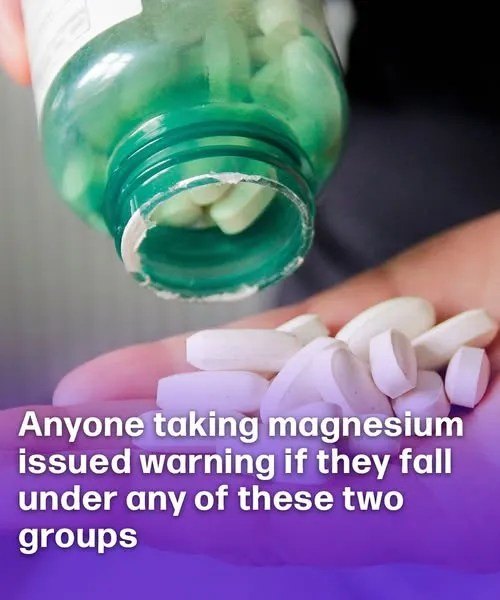
There isn’t a single “official alert” from regulators, but the recent reporting your headline refers to is based on a growing clinical warning: magnesium supplements are generally safe for most healthy people, but they can become dangerous in specific high-risk groups—especially when taken in high doses or combined with certain medical conditions or medications.
Here’s what health experts are emphasizing in the newer warnings.
What the warning is about
Magnesium (a common mineral in Magnesium supplements) is widely used for sleep, cramps, constipation, and muscle health. But excess magnesium can build up in the blood (called hypermagnesemia) when the body can’t remove it properly.
That’s where the risk concentrates.
The 2 high-risk groups experts are most concerned about
1) People with kidney disease
This is the biggest and most consistently cited risk group.
Healthy kidneys normally filter out extra magnesium. But in people with chronic or reduced kidney function, magnesium can accumulate quickly—especially from:
- supplements
- magnesium-containing antacids
- laxatives (like milk of magnesia)
This can lead to symptoms ranging from:
- nausea and weakness
- low blood pressure
- irregular heartbeat
- in severe cases, dangerous heart rhythm problems
Multiple medical sources now stress that even “normal” supplement doses may be unsafe in moderate to advanced kidney disease. (ScienceInsights)
2) Older adults (especially with hidden kidney decline)
Older adults are being flagged more often in newer guidance because:
- kidney function naturally declines with age
- they are more likely to use multiple medications
- they may already take magnesium-containing antacids or laxatives
So even without diagnosed kidney disease, the risk of magnesium buildup is higher in this group. (Office of Dietary Supplements)
Why this warning is trending now
A few reasons experts are talking about it more:
- Supplement use has increased (often without medical supervision)
- Many products exceed the recommended upper limit (~350 mg/day from supplements)
- Kidney disease and diabetes are becoming more common
- People often combine multiple magnesium sources unknowingly (multivitamins + powders + antacids)
Key takeaway
For most healthy people, magnesium from food or moderate supplements is usually fine.
But the concern is not “magnesium is dangerous”—it’s:
“Magnesium is safe only when your kidneys can reliably clear the excess.”
If you want, I can break down:
- safe daily doses for different goals (sleep, cramps, constipation)
- which forms (glycinate, citrate, oxide) are safer for specific uses
- or whether you personally should avoid it based on health factors you’re aware of