How to Get Rid of Milia: Those Annoying White Bumps
First, a quick correction: milia are not fat cysts. They are tiny, benign cysts filled with keratin (a skin protein), not fat.
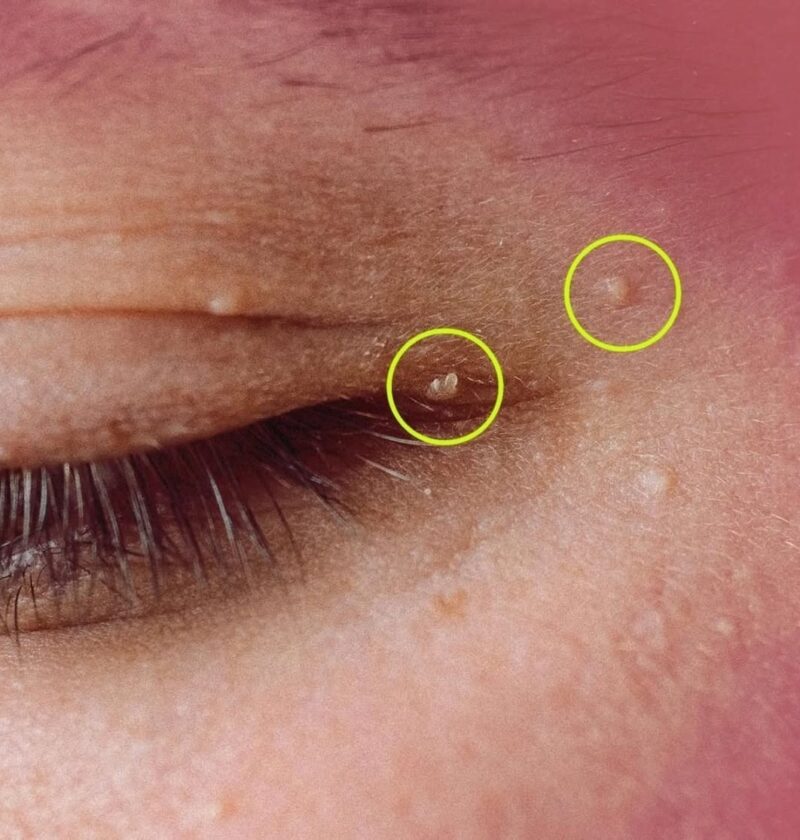
Milia are common, especially around the eyes, cheeks, nose, and forehead. They appear as small white or yellowish bumps just under the skin.
What Causes Milia?
Milia form when dead skin cells and keratin become trapped beneath the skin’s surface.
Common causes include:
- Natural skin renewal processes
- Sun damage
- Heavy or occlusive skincare products
- Skin injuries (burns, rashes, or blistering)
- Long-term use of topical steroids
- Aging skin
Newborns commonly develop milia, but they can occur at any age.
How to Get Rid of Milia
1. Don’t Squeeze or Pick Them
Unlike pimples, milia do not have an opening to the skin surface. Squeezing them can:
- Irritate the skin
- Cause infection
- Lead to scarring
2. Gentle Exfoliation
Regular exfoliation may help prevent new milia from forming.
Look for products containing:
- Alpha Hydroxy Acids (AHAs)
- Beta Hydroxy Acids (BHAs)
Use according to product instructions, especially if you have sensitive skin.
3. Topical Retinoids
Retinoids increase skin cell turnover and may help milia resolve over time.
Examples include:
- Tretinoin
- Adapalene
Retinoids can cause irritation and may not be suitable during pregnancy. Consult a healthcare professional before use.
4. Avoid Heavy Products
If you’re prone to milia:
- Choose non-comedogenic moisturizers and sunscreens
- Avoid very thick creams around the eyes unless specifically recommended
5. Professional Removal
For persistent milia, a dermatologist can safely remove them using:
- Sterile extraction
- Electrocautery
- Laser treatment
- Chemical peels in selected cases
Professional extraction is often the fastest and most effective treatment.
When to See a Dermatologist
Consider medical evaluation if:
- The bumps persist for months
- They are spreading rapidly
- You are unsure whether they are milia
- They become inflamed or painful
- They occur after a skin injury or medical treatment
Some skin conditions can resemble milia and may require different treatment.
Prevention Tips
- Use sunscreen daily
- Exfoliate gently and regularly
- Remove makeup thoroughly
- Avoid overly heavy skincare products if they seem to trigger milia
- Follow a consistent skincare routine