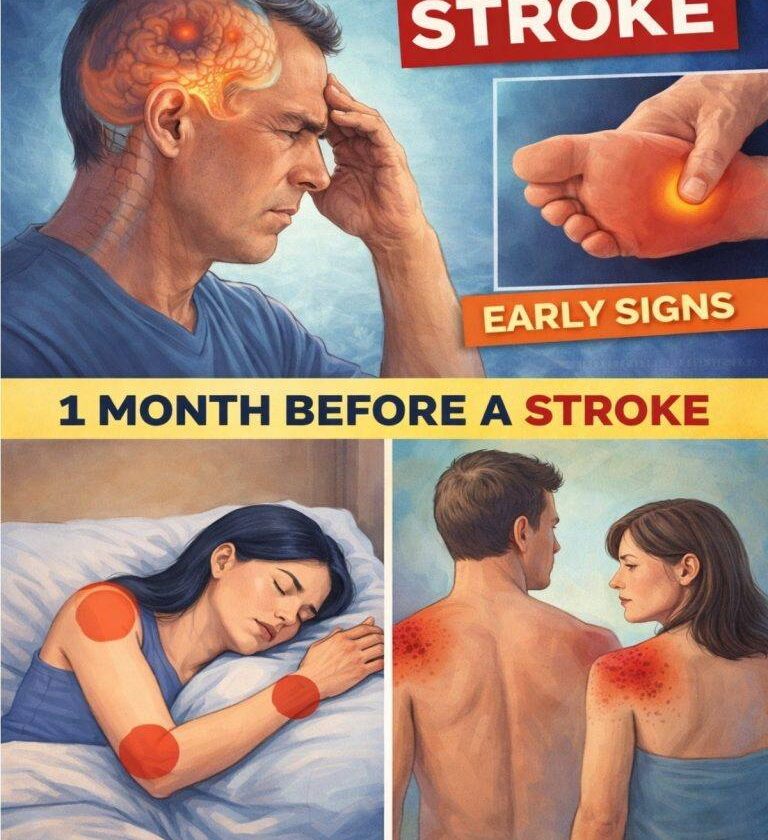
That headline is clickbait-style and medically misleading in tone (especially the “No. 6 saved my patient’s life” part). Stroke warning signs are real and important—but they don’t reliably appear “up to one month before” in a predictable list like that. What can happen is that some people experience early warning episodes called TIAs (Transient Ischemic Attacks) days to weeks before a major stroke.
Here’s a clear, medically accurate breakdown of what matters.
Early warning signs that may appear before a stroke
Some people experience temporary or intermittent neurological symptoms due to reduced blood flow to the brain. These can include:
- Sudden weakness or numbness in face, arm, or leg (especially one side)
- Brief difficulty speaking or understanding speech
- Temporary vision loss or blurred vision in one eye
- Sudden dizziness, loss of balance, or coordination problems
- Short episodes of confusion
- Sudden severe headache (less common, but important if unusual for the person)
If these symptoms disappear within minutes to hours, it may be a TIA, which is a major warning sign of future stroke risk.
Important reality check
- There is no reliable “1-month warning list” that applies to everyone.
- Many strokes happen without any clear prior symptoms.
- TIAs are the most important “early warning” clinicians watch for.
Proven ways to reduce stroke risk
These are evidence-based prevention strategies:
1. Control blood pressure
High blood pressure is the #1 risk factor.
2. Manage blood sugar
Especially important for people with diabetes or prediabetes.
3. Lower cholesterol
Helps reduce artery blockage (atherosclerosis).
4. Stop smoking
One of the strongest preventable risk factors.
5. Stay physically active
Even 30 minutes of brisk walking most days helps.
6. Maintain a healthy weight
Reduces strain on heart and blood vessels.
7. Eat a brain-healthy diet
Focus on:
- Fruits and vegetables
- Whole grains
- Fish
- Nuts
Limit salt, trans fats, and ultra-processed foods.
8. Treat heart conditions
Atrial fibrillation and other rhythm disorders significantly raise stroke risk.
9. Limit alcohol
Heavy drinking increases stroke risk.
When to seek emergency help (critical)
Use the FAST rule:
- Face drooping
- Arm weakness
- Speech difficulty
- Time to call emergency services immediately
Even if symptoms disappear, it should still be treated as urgent.
If you want, I can also:
- Turn this into a simple infographic-style checklist
- Explain how to distinguish stroke vs migraine vs anxiety symptoms
- Or list early signs specifically for younger people (under 40), which are often missed