That headline is designed to sound alarming, but it’s not that simple.
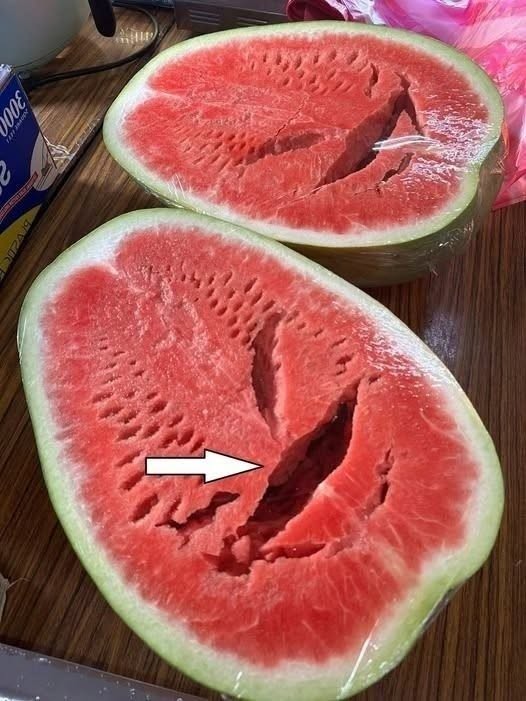
Seeing cracks or unusual patterns inside a watermelon does not automatically mean it’s dangerous.
We’re talking about Watermelon, and internal texture can vary for several harmless reasons.
🍉 What those “cracks” can actually be
1. Natural growth variation (most common)
- Uneven ripening while growing
- Rapid growth in hot weather
- Creates small internal splits or “fibrous cracks”
👉 Usually safe to eat if it smells and tastes normal.
2. Overripe watermelon
- Flesh becomes soft and slightly separated
- Texture looks broken or grainy
- Taste may be overly sweet or mushy
3. Temperature stress (during growth/storage)
- Sudden heat or water imbalance can affect internal structure
- Causes hollow or cracked-looking flesh
4. “Hollow heart” condition (agricultural issue)
- Internal gaps or cracks in the center
- A known but harmless growth defect in melons
⚠️ When you SHOULD NOT eat it
Discard the watermelon if you notice:
- Sour or fermented smell
- Slimy texture
- Mold inside
- Bitter or “off” taste
- Gas bubbles or unusual liquid leakage
These indicate spoilage, not just cracking.
🧠 Important reality check
- Internal cracks are usually a quality issue, not a safety warning
- Viral posts exaggerate normal agricultural variations
- Farmers and supermarkets often still sell these if they are safe to eat
👍 Bottom line
Cracks inside watermelon are usually harmless growth or ripening variations, not a reason to panic. Use smell, taste, and texture—not appearance alone—to judge safety.
If you want, I can show you simple tricks to pick a perfectly sweet watermelon before cutting it, so you avoid disappointing ones completely.