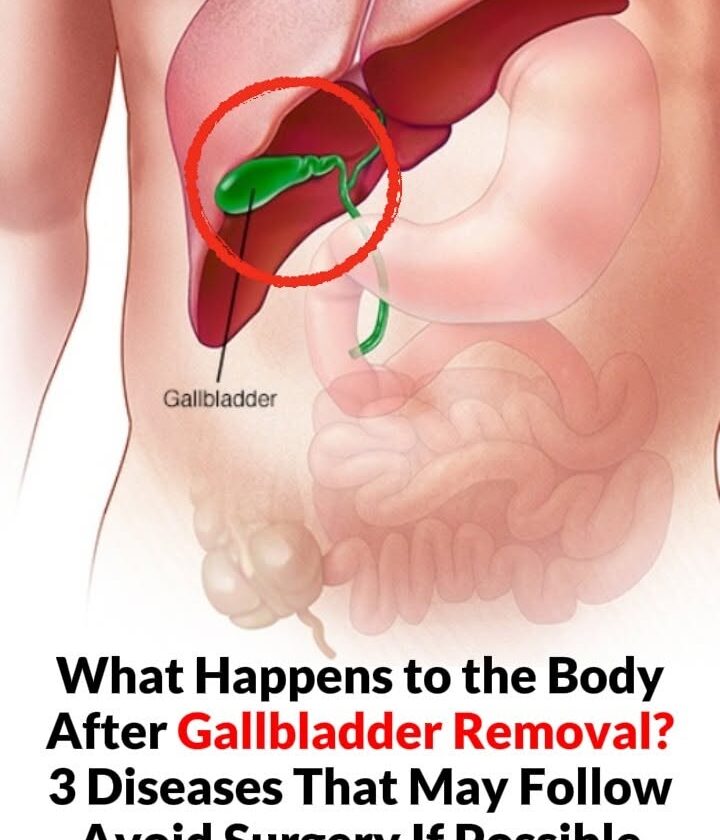
The headline “3 diseases that may follow – avoid surgery if possible” is misleading. While Gallbladder removal surgery can have side effects and some people develop digestive symptoms afterward, it is often the recommended and safest treatment for painful gallstones or certain gallbladder diseases. Delaying needed surgery can sometimes lead to serious complications.
Here’s a balanced look at what may happen after gallbladder removal.
What changes after surgery?
The gallbladder stores and concentrates bile. After it’s removed, bile flows directly from the liver into the small intestine instead of being released in larger amounts during meals.
Most people adapt well within weeks to months and can eat a normal diet.
Possible conditions or symptoms after gallbladder removal
1. Diarrhea or loose stools
A small percentage of people develop more frequent bowel movements because bile flows continuously into the intestine.
What may help:
- Eat smaller, more frequent meals.
- Limit very fatty or greasy foods, especially early after surgery.
- Increase fiber gradually if advised by your healthcare provider.
2. Post-cholecystectomy syndrome
Some people continue to have abdominal pain, bloating, indigestion, or nausea after surgery. These symptoms can have many causes, including acid reflux, irritable bowel syndrome, retained bile duct stones, or problems unrelated to the gallbladder.
Persistent or severe symptoms should be evaluated rather than assumed to be a normal consequence of surgery.
3. Bile reflux (less common)
In some cases, bile can flow backward into the stomach, causing upper abdominal discomfort or nausea. This is much less common than acid reflux and requires medical assessment if suspected.
Does surgery cause other diseases?
Research has found associations between gallbladder removal and changes in digestion or the gut microbiome, but for most people, the overall risk of developing serious new diseases because of the surgery is low. Association does not necessarily mean the surgery directly causes those conditions.
Can surgery be avoided?
It depends on the reason for surgery.
If you have:
- Silent gallstones (stones without symptoms), surgery is often not needed.
- Repeated painful gallstone attacks, inflammation, infection, or complications such as pancreatitis, surgery is frequently the most effective treatment.
Your doctor weighs the risks of surgery against the risks of leaving the gallbladder in place.
When to seek medical care after surgery
Contact your healthcare provider if you develop:
- Persistent or worsening abdominal pain
- Fever or chills
- Yellowing of the skin or eyes (jaundice)
- Persistent vomiting
- Ongoing diarrhea causing dehydration
- Dark urine or pale stools
Bottom line
Most people recover well after gallbladder removal and live normal, healthy lives. While some digestive symptoms can occur afterward, they are often manageable, and serious long-term complications are uncommon. If surgery is recommended because of recurrent gallstones or complications, avoiding it “if possible” is not always the safest choice—the decision should be based on your specific medical condition and a discussion with your surgeon.