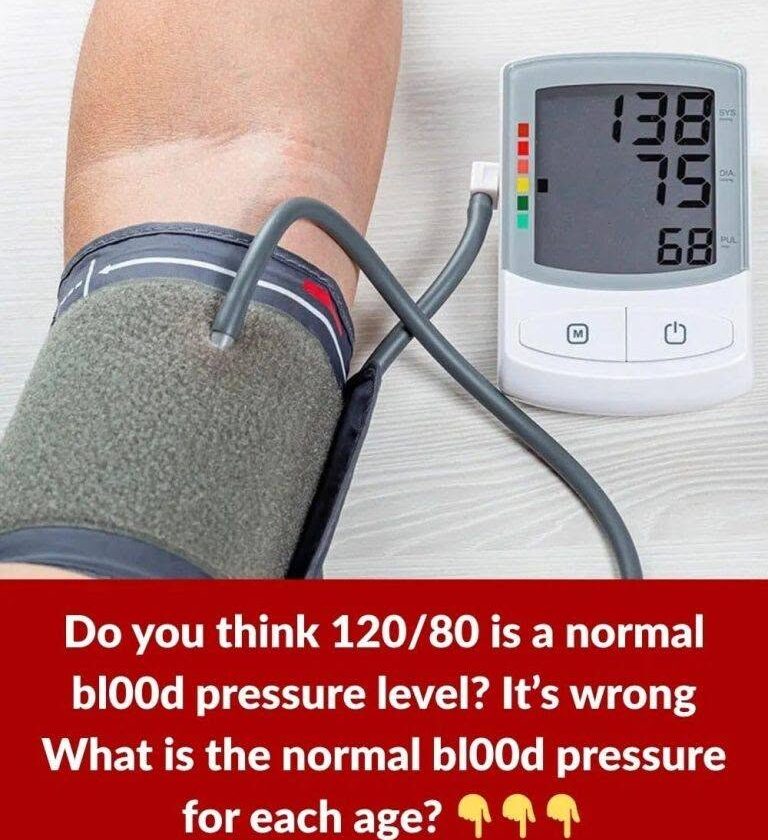
Blood pressure “normal ranges” don’t change dramatically by age in adults anymore—modern guidelines focus more on a single healthy range for adults, while children have age-based percentiles.
Here’s a clear breakdown:
🧑⚕️ Adults (18+ years)
Normal blood pressure:
- Systolic: below 120 mmHg
- Diastolic: below 80 mmHg
👉 Written as: <120/80 mmHg
Categories:
- Normal: <120 / <80
- Elevated: 120–129 / <80
- High BP (Stage 1): 130–139 / 80–89
- High BP (Stage 2): ≥140 / ≥90
- Crisis: ≥180 / ≥120 (medical emergency)
👦 Children & Teens (approximate normal ranges)
For children, “normal” depends on age, height, and sex, but general averages:
- Newborns: ~60–90 / 20–60
- Infants (1–12 months): ~70–100 / 30–65
- Toddlers (1–2 yrs): ~80–110 / 50–80
- Children (3–5 yrs): ~80–110 / 50–80
- Children (6–12 yrs): ~90–120 / 60–80
- Teens (13–17 yrs): ~100–130 / 65–85
📌 Important points
- BP naturally varies during the day (activity, stress, sleep)
- One reading is not enough for diagnosis
- Proper measurement (rested, seated, correct cuff size) matters a lot
⚠️ When to pay attention
- Repeated readings above 130/80 in adults
- Symptoms like headache, dizziness, chest pain, or shortness of breath
If you want, tell me your age and recent BP reading—I can help you interpret whether it’s normal or not.