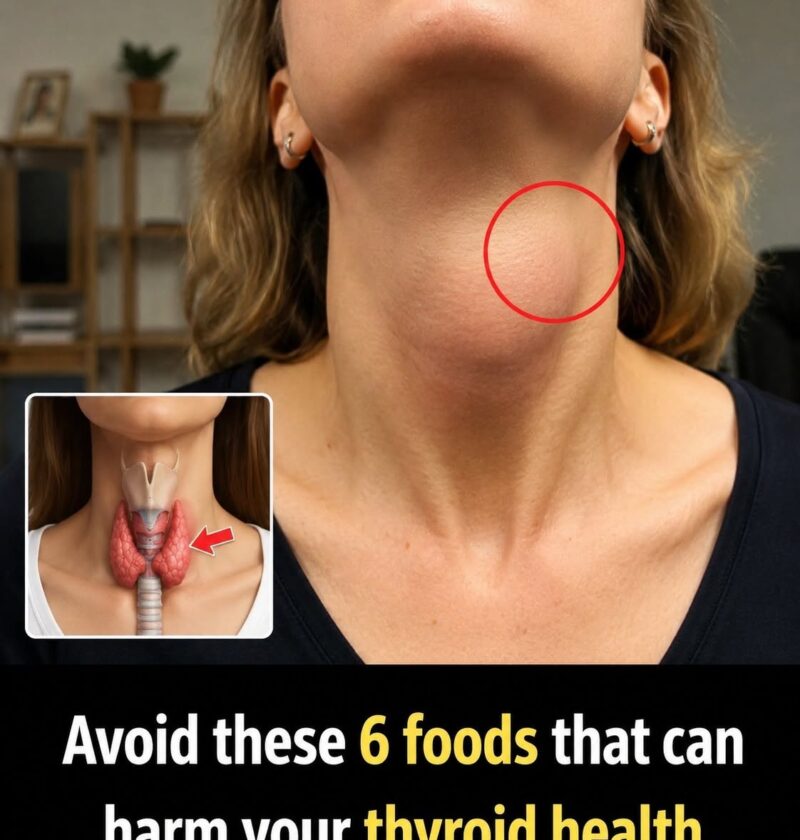
The idea that “6 foods secretly harm your thyroid” is often oversimplified. Your thyroid—affected in conditions like Thyroid disease—is influenced by overall nutrition, iodine status, and medical conditions, not just a few “bad” foods.
Still, there are certain foods that can affect thyroid function if eaten in large amounts or in specific situations. Here’s the evidence-based, realistic version of that list.
1. Soy products (moderation matters)
Examples: tofu, soy milk, edamame
What’s the concern?
Soy can slightly interfere with thyroid hormone absorption or iodine use in some people.
Reality check:
- Normal intake is usually safe
- Only a concern if iodine intake is low or medication timing is poor
Tip:
If you take thyroid medication, don’t take it at the same time as soy.
2. Cruciferous vegetables (raw, in excess)
Examples: cabbage, broccoli, cauliflower, kale
What’s the concern?
They contain goitrogens, which may interfere with iodine use in very large raw amounts.
Reality:
- Cooking greatly reduces this effect
- Normal servings are healthy and beneficial
3. Highly processed foods
Examples: chips, fast food, packaged snacks
Why it matters:
- Can increase inflammation
- Often low in iodine, selenium, and zinc
- May worsen weight gain linked to thyroid issues
4. Excess iodine-rich foods or supplements
Examples: kelp, iodine tablets, some seaweed products
Why it matters:
Too much iodine can actually worsen thyroid imbalance in some people.
Important:
Both too little and too much iodine can be harmful.
5. Gluten (only for some people)
Relevant mainly if you have:
- Celiac disease
- Autoimmune thyroid conditions (like Hashimoto’s)
Note:
There’s no strong evidence that gluten harms thyroid health in everyone.
6. Highly sugary foods
Examples: sweets, sodas, desserts
Why it matters:
- Can worsen fatigue and weight gain
- May increase inflammation
- Doesn’t directly “damage” thyroid, but affects symptoms
Key truth most articles miss
There is no strong scientific evidence that everyday foods “damage” the thyroid in healthy amounts. The real issues are usually:
- Iodine imbalance
- Autoimmune conditions
- Medication timing (like levothyroxine interactions)
Practical tips for thyroid health
Instead of extreme food restrictions, focus on:
- Balanced iodine intake (not excessive)
- Selenium sources (nuts, eggs, fish)
- Adequate protein
- Taking thyroid medication on an empty stomach if prescribed
- Waiting 30–60 minutes before eating after medication
Bottom line
For most people with Thyroid disease, no single food group needs to be completely avoided. Problems usually come from excess, poor balance, or underlying autoimmune conditions—not normal eating patterns.
If you want, I can also break down:
- Best foods to support thyroid function
- What actually worsens hypothyroidism symptoms
- Or how to time food with thyroid medication for best absorption