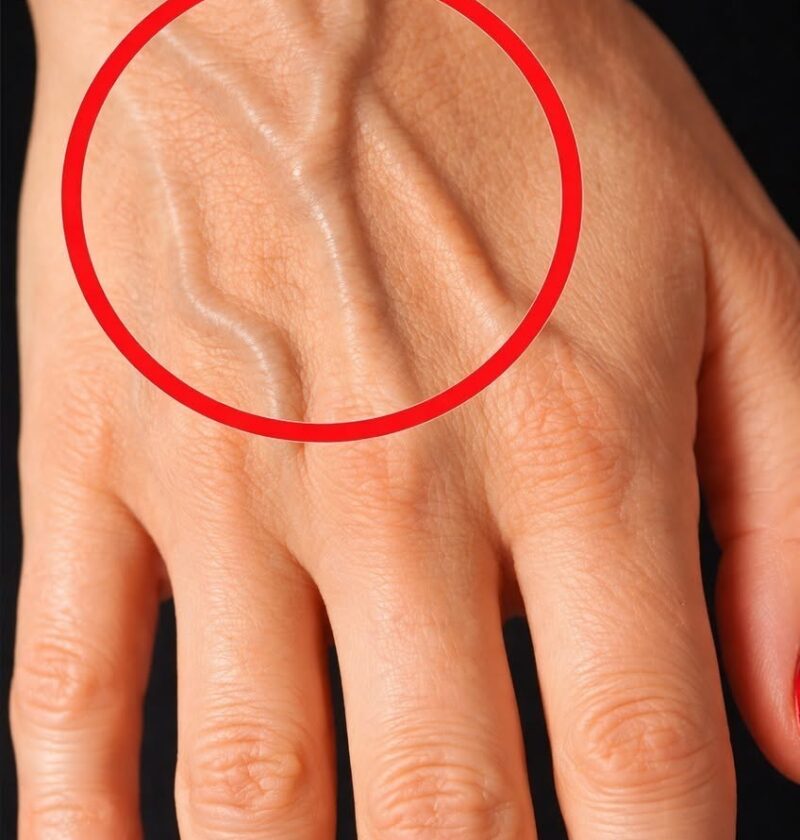
Visible veins do not automatically mean there’s a health problem. For many people, they’re completely normal. Whether visible veins are significant depends on where they are, how they look, and whether they’re accompanied by other symptoms.
Here are some common reasons veins may be more visible:
- Low body fat: With less fat under the skin, veins are easier to see.
- Exercise: After a workout, muscles swell and blood flow increases, making veins more prominent temporarily.
- Age: As skin becomes thinner with age, veins often become more noticeable.
- Genetics: Some people naturally have more visible veins.
- Fair or thin skin: Veins show through more easily.
Sometimes, visible veins can be related to a medical condition:
- Varicose veins: Enlarged, twisted veins that may cause aching, heaviness, swelling, or itching.
- Chronic venous insufficiency: Veins have trouble returning blood to the heart, leading to leg swelling, skin changes, or ulcers in more advanced cases.
When should you see a doctor?
Seek medical evaluation if your visible veins are accompanied by:
- Pain, tenderness, or warmth
- Significant leg swelling
- Skin discoloration or sores
- Sudden swelling in one leg
- A vein that becomes hard, red, and painful
Bottom line
If your veins are visible, it most often means your veins are close to the surface of the skin or your body composition and skin type make them easier to see. It does not by itself mean you’re especially healthy, dehydrated, have poor circulation, or have a serious illness.
If you’re asking about visible veins in a specific part of the body (such as the hands, legs, chest, or forehead), I can explain what is typical for that area.