Urine color can offer useful clues about hydration, diet, medications, and sometimes underlying health conditions. One unusual color isn’t always a cause for concern, but persistent changes or symptoms like pain, fever, or blood should be evaluated by a healthcare professional.
Here’s a general guide:
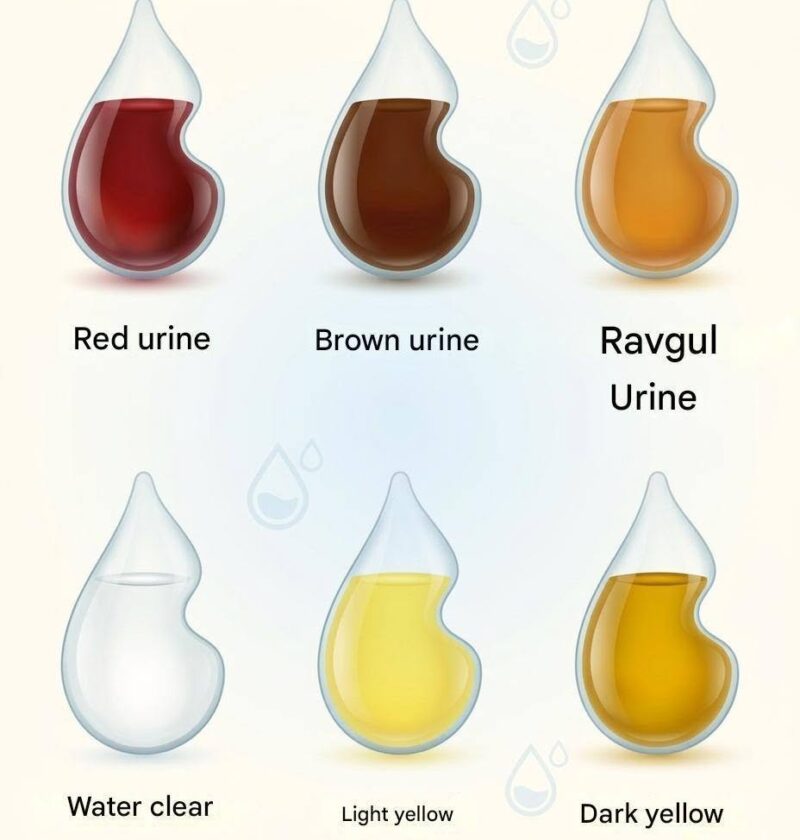
| Urine color | What it may mean |
|---|---|
| Pale yellow to light gold | Usually normal and a sign of good hydration. The yellow color comes from a pigment called urochrome. |
| Clear | Often means you’re very well hydrated. If it stays completely clear all the time, you may be drinking more water than your body needs. |
| Dark yellow or amber | Often indicates dehydration. Drinking fluids usually lightens the color. |
| Orange | Can result from dehydration, certain medications, or foods. Occasionally, it may signal liver or bile duct problems, especially if accompanied by pale stools or yellowing of the skin or eyes. |
| Pink or red | May be caused by foods like beets or berries, certain medications, or blood in the urine. Blood can result from infections, kidney stones, or other conditions and should be checked if the cause isn’t obvious. |
| Brown or tea-colored | Can occur with severe dehydration, some medications, liver disease, or muscle breakdown. It warrants medical evaluation if persistent or accompanied by other symptoms. |
| Blue or green | Rare. May be due to certain medications, food dyes, or uncommon infections. In rare cases, it can be related to inherited conditions. |
| Cloudy or milky | Can be caused by dehydration, crystals, or a urinary tract infection, especially if there’s burning, frequent urination, fever, or a strong odor. |
When to seek medical attention
You should contact a healthcare provider if you have:
- Red, pink, or brown urine that isn’t explained by food or medication.
- Dark urine along with yellow skin or eyes.
- Cloudy urine with pain, fever, or burning during urination.
- Persistent changes in urine color lasting more than a day or two without an obvious cause.
- Severe back or side pain, especially with blood in the urine.
Keep in mind that vitamins (especially vitamin B supplements), medications, and foods such as beets, blackberries, carrots, rhubarb, and asparagus can temporarily change urine color. If you’re unsure whether a color change is due to something you ate or a health issue, or if it’s accompanied by other symptoms, it’s a good idea to get medical advice.