Urine color can offer useful clues about hydration, diet, medications, and sometimes underlying health conditions. One unusual color doesn’t necessarily mean something is wrong, but persistent or unexplained changes are worth paying attention to.
Here’s a general guide:
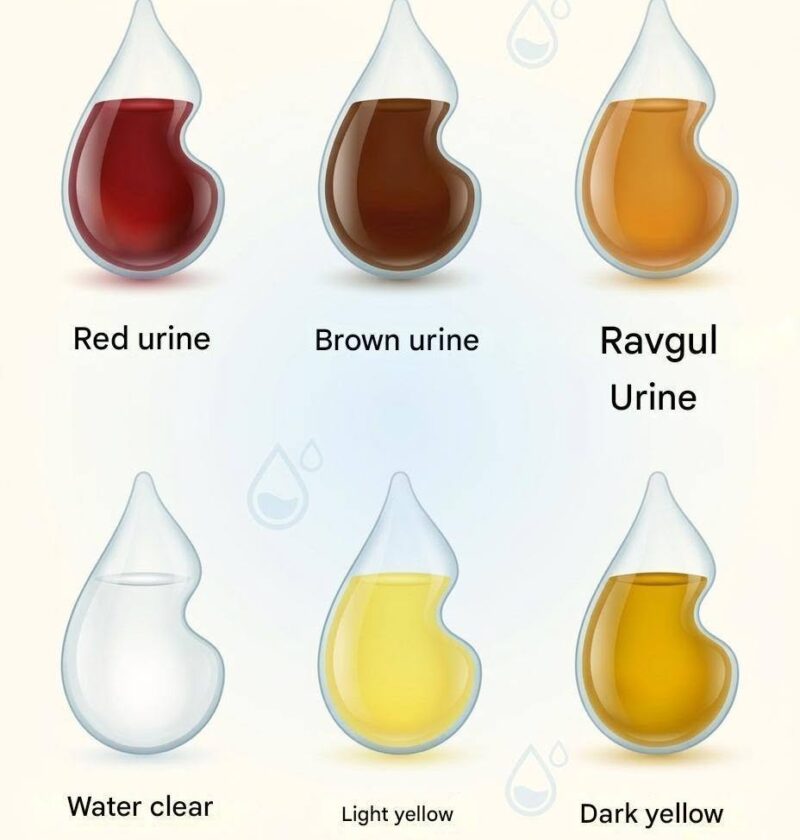
| Urine color | What it may mean |
|---|---|
| Clear | You may be very well hydrated, or possibly drinking more water than you need. |
| Pale yellow to straw-colored | Usually considered normal and a sign of good hydration. |
| Dark yellow or amber | Often means you’re dehydrated and should drink more fluids. |
| Orange | Can result from dehydration, certain medications, or foods. Less commonly, it may be related to liver or bile duct problems, especially if accompanied by pale stools or yellowing of the skin or eyes. |
| Pink or red | May be caused by foods like beets, blackberries, or rhubarb. It can also indicate blood in the urine, which should be evaluated, especially if unexplained. |
| Brown or cola-colored | Can occur with severe dehydration, certain medications, liver disease, or muscle breakdown. It should be assessed promptly if it isn’t explained by diet or medication. |
| Blue or green | Rare. May be caused by food dyes, medications, or certain medical conditions. |
| Cloudy or milky | May suggest a urinary tract infection, kidney stones, or excess minerals. If accompanied by pain, fever, or a strong odor, medical evaluation is recommended. |
Other things to notice
Color isn’t the only clue:
- Strong ammonia smell: Often due to concentrated urine from dehydration, though infections can also change the odor.
- Sweet or fruity smell: Can occur with uncontrolled diabetes or other metabolic conditions.
- Foamy urine: A single foamy urination isn’t usually concerning, but persistent foam can sometimes indicate protein in the urine and should be checked.
When to seek medical care
Contact a healthcare professional if you notice:
- Red or brown urine without an obvious dietary cause.
- Blood in your urine.
- Persistent dark urine despite good hydration.
- Cloudy urine with pain, fever, or burning during urination.
- Yellowing of the skin or eyes along with dark urine.
- Persistent changes in urine color that don’t have an obvious explanation.
For most healthy adults, pale yellow is generally a good target color and usually reflects adequate hydration.
If your urine has changed color recently, tell me what color it is, how long it’s been that way, whether you have any symptoms (pain, burning, fever, abdominal or back pain), and any new foods or medications you’ve had. I can help you think through the most likely explanations.