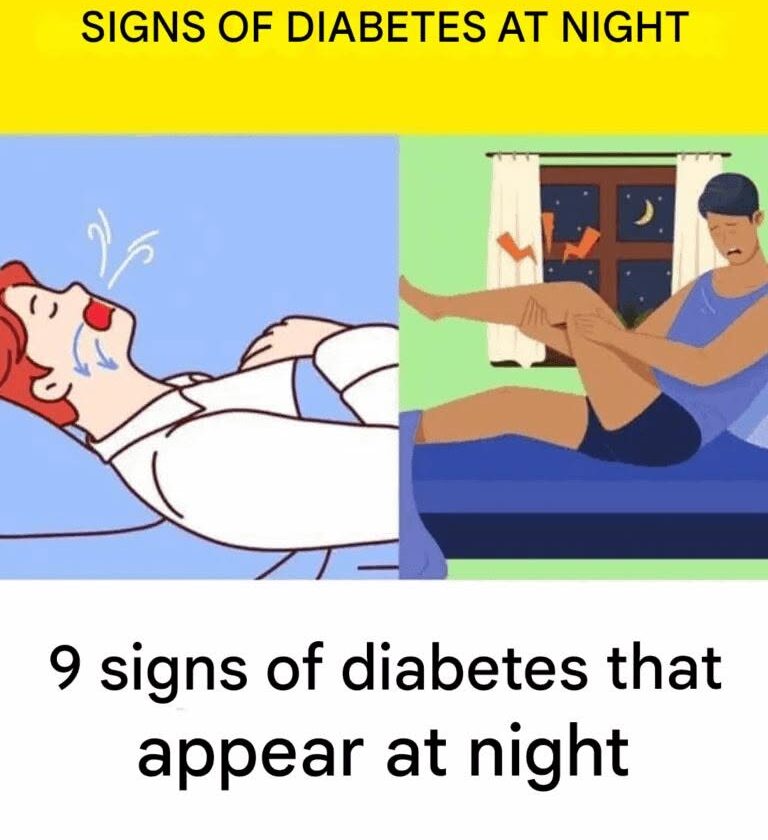
Here are 9 signs of diabetes that may appear or worsen at night:
🌙 1) Frequent nighttime urination (nocturia)
Waking up multiple times to pee is a classic early sign.
Why it happens:
High blood sugar forces kidneys to remove excess glucose through urine.
💧 2) Excessive thirst at night
Waking up very thirsty or needing water often.
Why it happens:
Fluid loss from frequent urination leads to dehydration.
😴 3) Trouble staying asleep
Waking up repeatedly without a clear reason.
Why it happens:
Blood sugar fluctuations can disturb sleep cycles.
⚡ 4) Night sweats or feeling overheated
Some people experience sweating or warmth at night.
Why it happens:
Blood sugar swings can trigger stress hormone release.
🦵 5) Night cramps or leg discomfort
Muscle cramps or restless legs during sleep.
Why it happens:
Poor circulation or nerve irritation linked to high glucose.
🔥 6) Tingling or burning sensations in feet/hands
Often more noticeable when lying still.
Why it happens:
Early nerve damage (diabetic neuropathy).
🍽️ 7) Waking up hungry at night
Sudden hunger or craving sweets.
Why it happens:
Blood sugar drops after spikes, triggering hunger signals.
😵 8) Nighttime fatigue or restless sleep
Feeling unrefreshed even after sleeping.
Why it happens:
Poor glucose control disrupts normal recovery processes.
🚻 9) Bedwetting or urgency (in more advanced cases)
More common in severe or uncontrolled cases.
Why it happens:
Excess glucose pulls water into urine.
⚠️ Important note
These signs do not automatically mean diabetes, but if several occur regularly, it’s worth checking blood sugar levels.
🧠 Bottom line
Nighttime symptoms like:
- frequent urination
- thirst
- sleep disruption
can be early clues of blood sugar imbalance and should not be ignored if persistent.
If you want, I can also explain early daytime signs of diabetes that people usually miss (before night symptoms even start).